Jakarta's Information & Knowledge Access - Biro PLH DKI Jakarta
Designing a digital hub that centralizes knowledge, fosters academic discussion, and promotes evidence-based urban planning for the public and government stakeholders.
UI/UX Designer
Website
Figma
Adobe Photoshop
6 Months
Project Overview
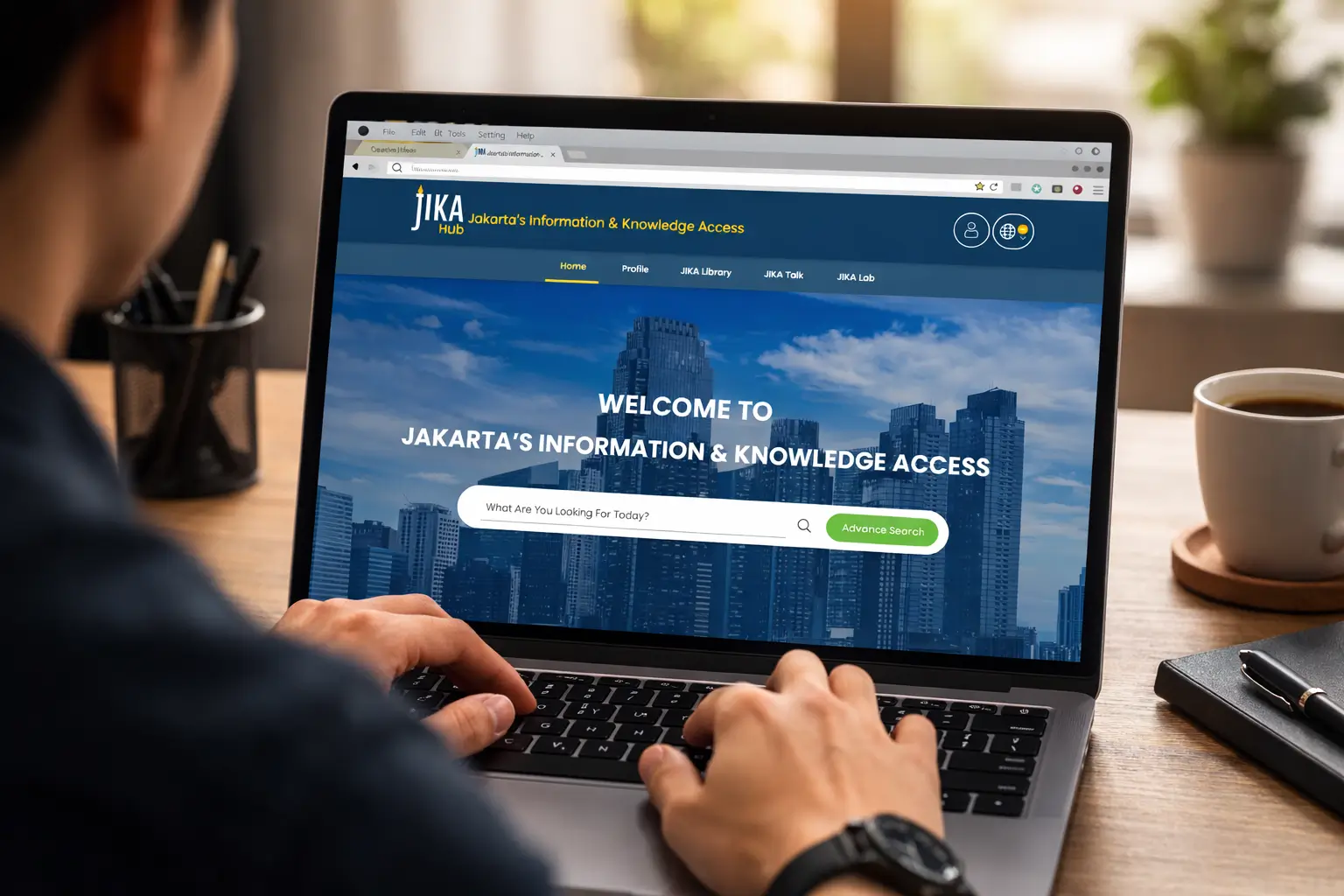
- This project was commissioned by Biro PLH DKI Jakarta — designing a platform that could serve as a centralized knowledge hub for urban planning literature, academic discussion, and institutional documentation of the bureau's research and innovation activities.
- Beyond a digital library, the platform features multiple content channels — including a Laboratory, Podcast, Webinar, and an Innovation portal where users can submit their own journals and research papers for official review and publication by the bureau.
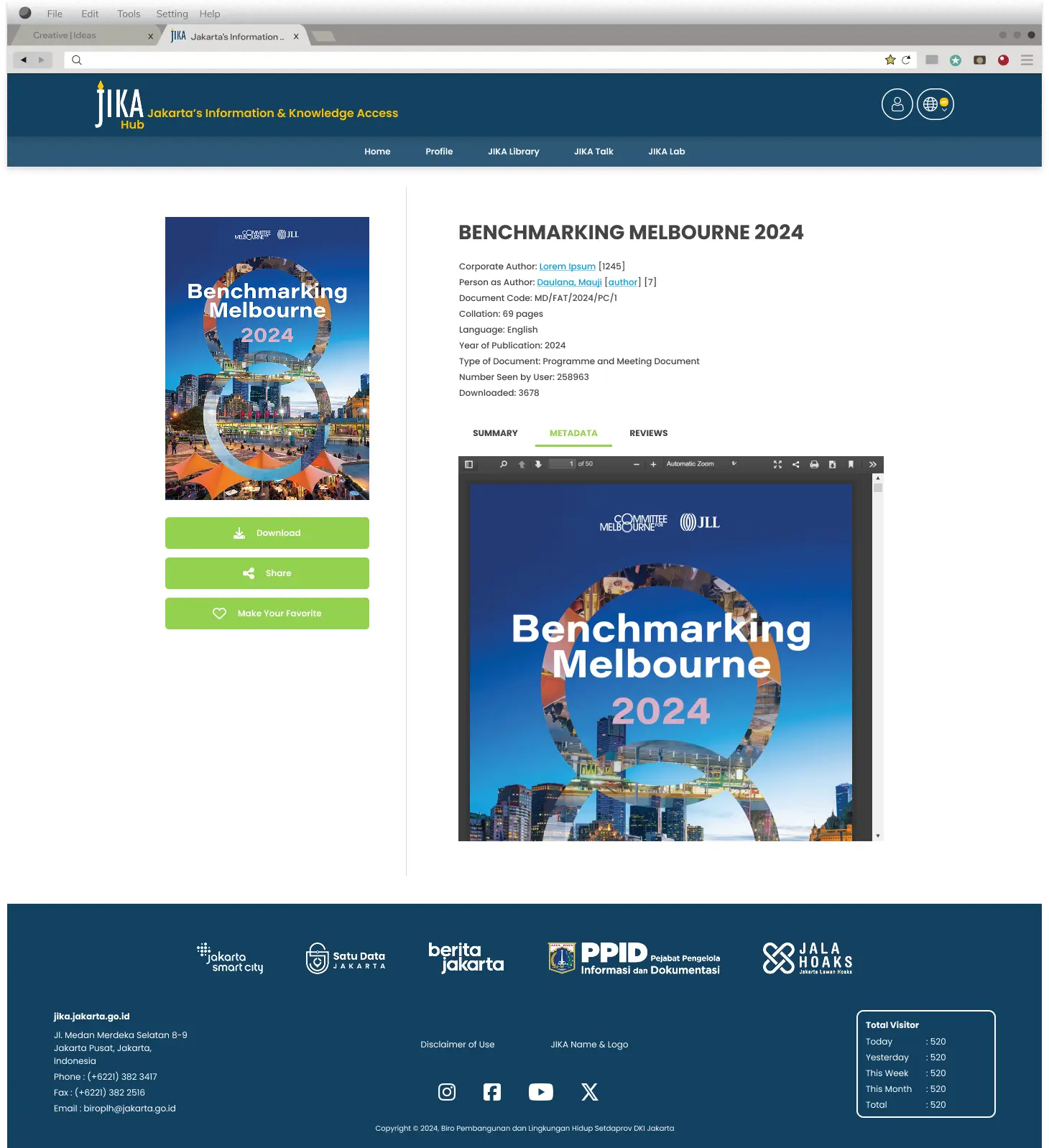
- Users can browse and download urban planning literature sourced from major cities around the world — giving both researchers and public stakeholders access to globally informed perspectives on Jakarta's urban development.
- The platform has been live on the internet and is actively maintained and updated by the bureau's team, with additional features still in ongoing development.
Role & Scope
- Served as UI/UX Designer — responsible for building the complete information architecture, user interface, and interaction design across the entire platform.
- Worked as the sole UI/UX Designer on the project, collaborating closely with the bureau's project manager and content team throughout the design and development process.
- Focused on creating an interface that could accommodate multiple content types — library downloads, event listings, podcast episodes, webinar registrations, and user-submitted journals — within a single cohesive platform experience.
Background
- Biro PLH DKI Jakarta needed a dedicated digital platform to consolidate their research, publications, and academic activities — which were previously scattered across different channels with no unified access point.
- The bureau also wanted a platform that could position them as a credible knowledge authority in Jakarta's urban planning space — both internally within the government and externally to the public and academic community.
Problem Statement
User Flow
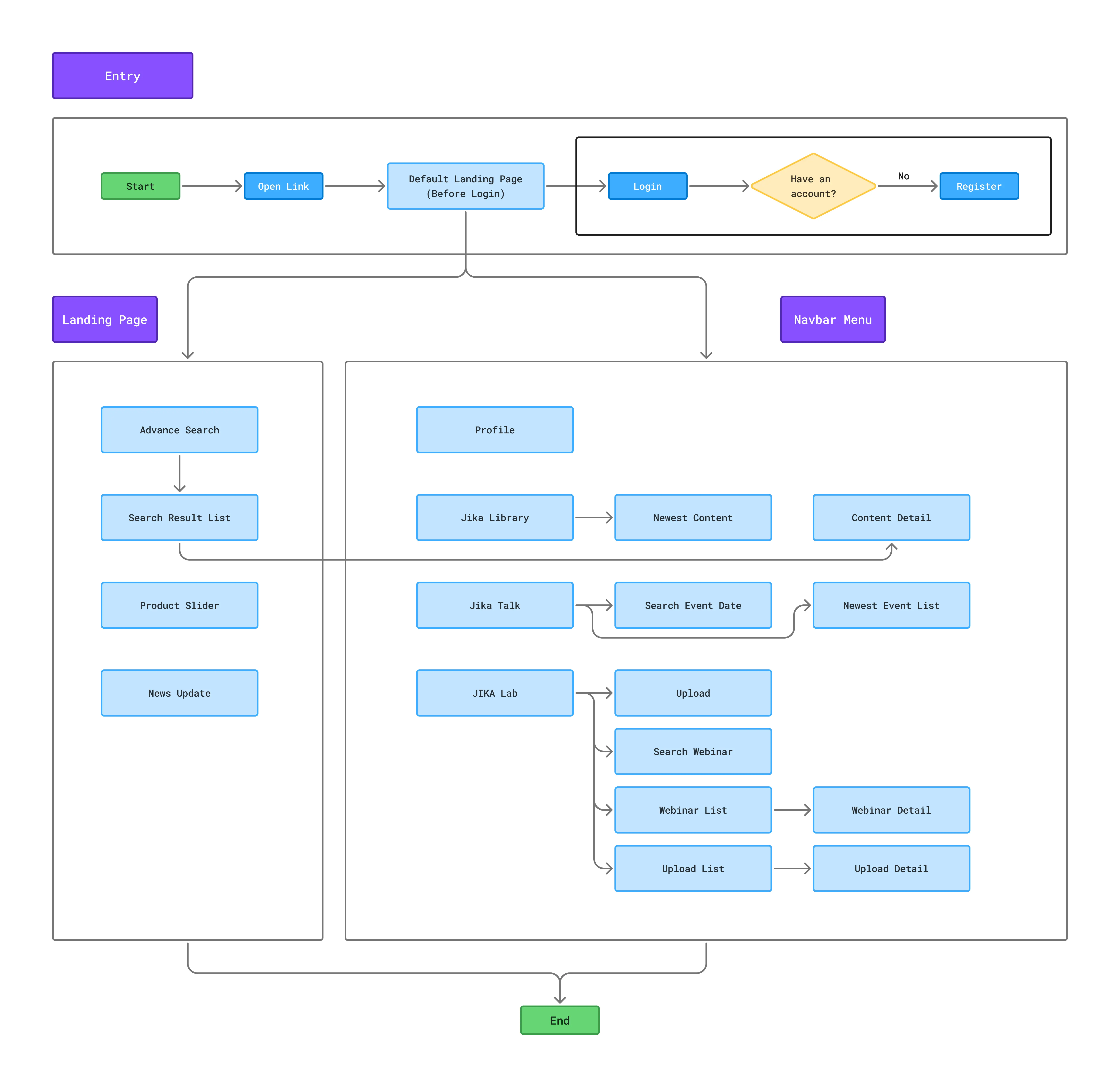
To map how users navigate the platform, a user flow was created covering the primary user journeys — from homepage entry through to content discovery, download, and journal submission.
Wireframe
There are no formal wireframes for this project, as the visual direction was defined early and development moved directly into high-fidelity design based on the agreed information architecture.
Final Design
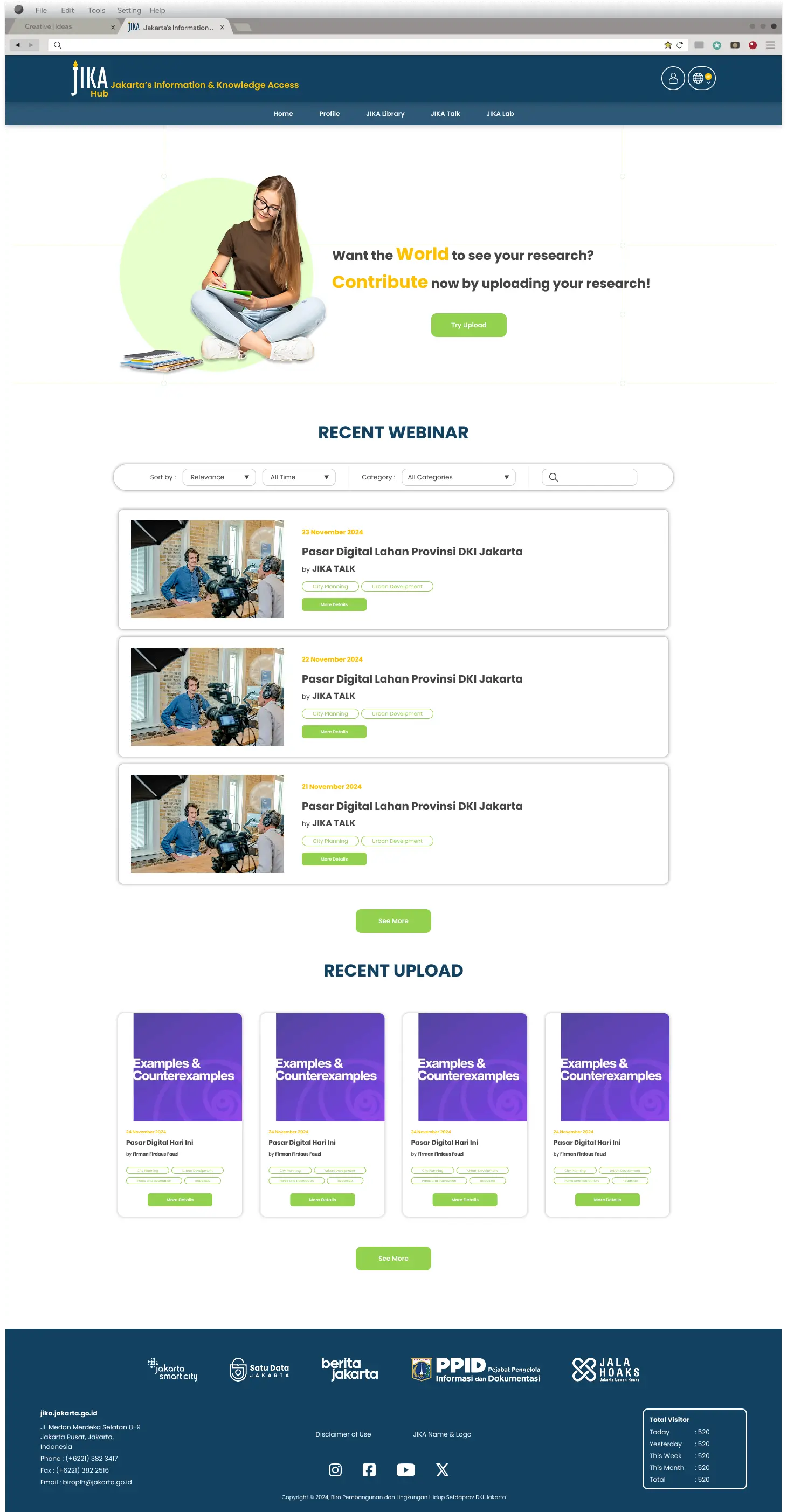
- The final design uses a deep navy blue palette — conveying institutional authority and academic credibility while maintaining a clean, modern digital feel appropriate for a public-facing government platform.
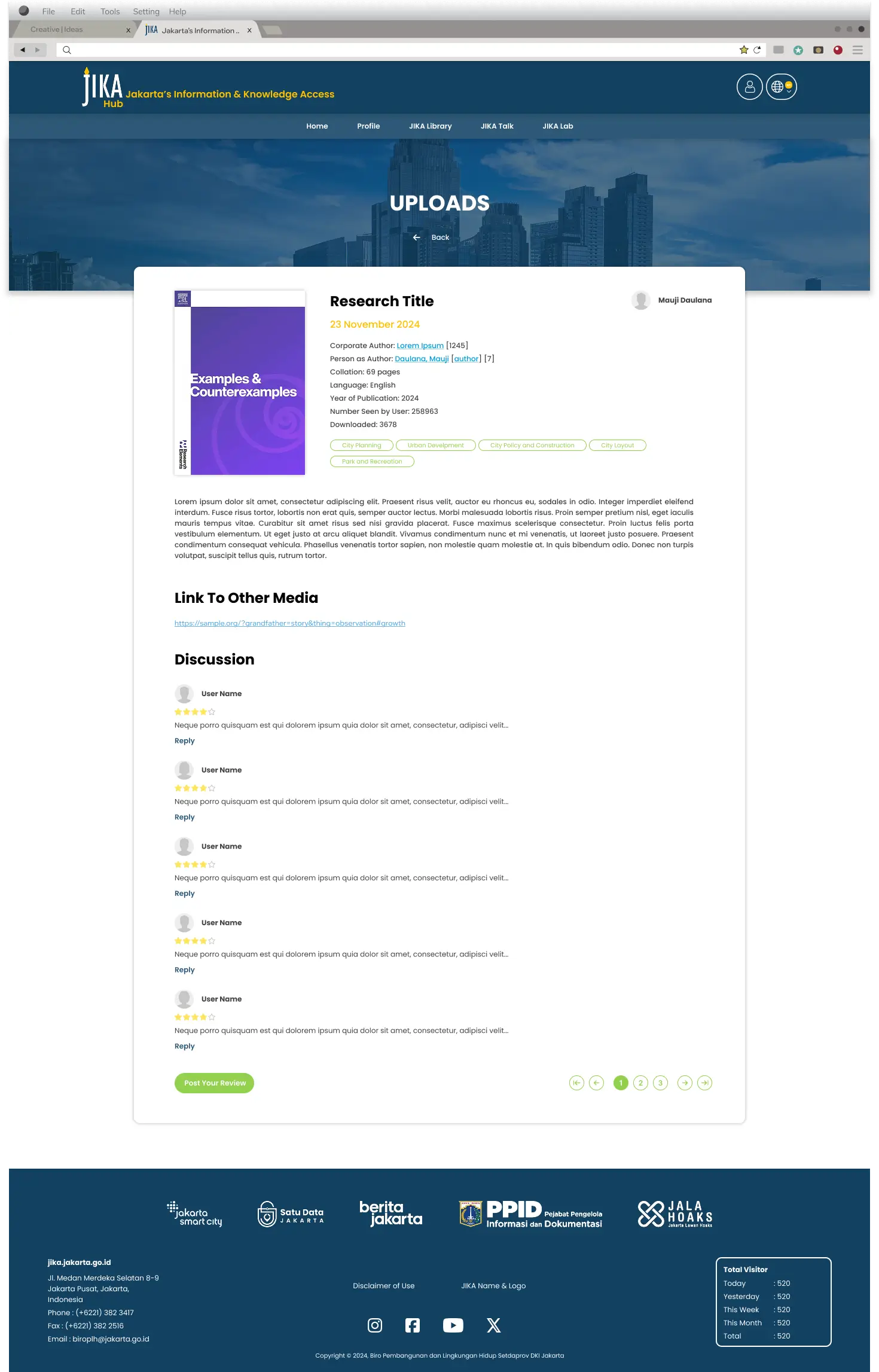
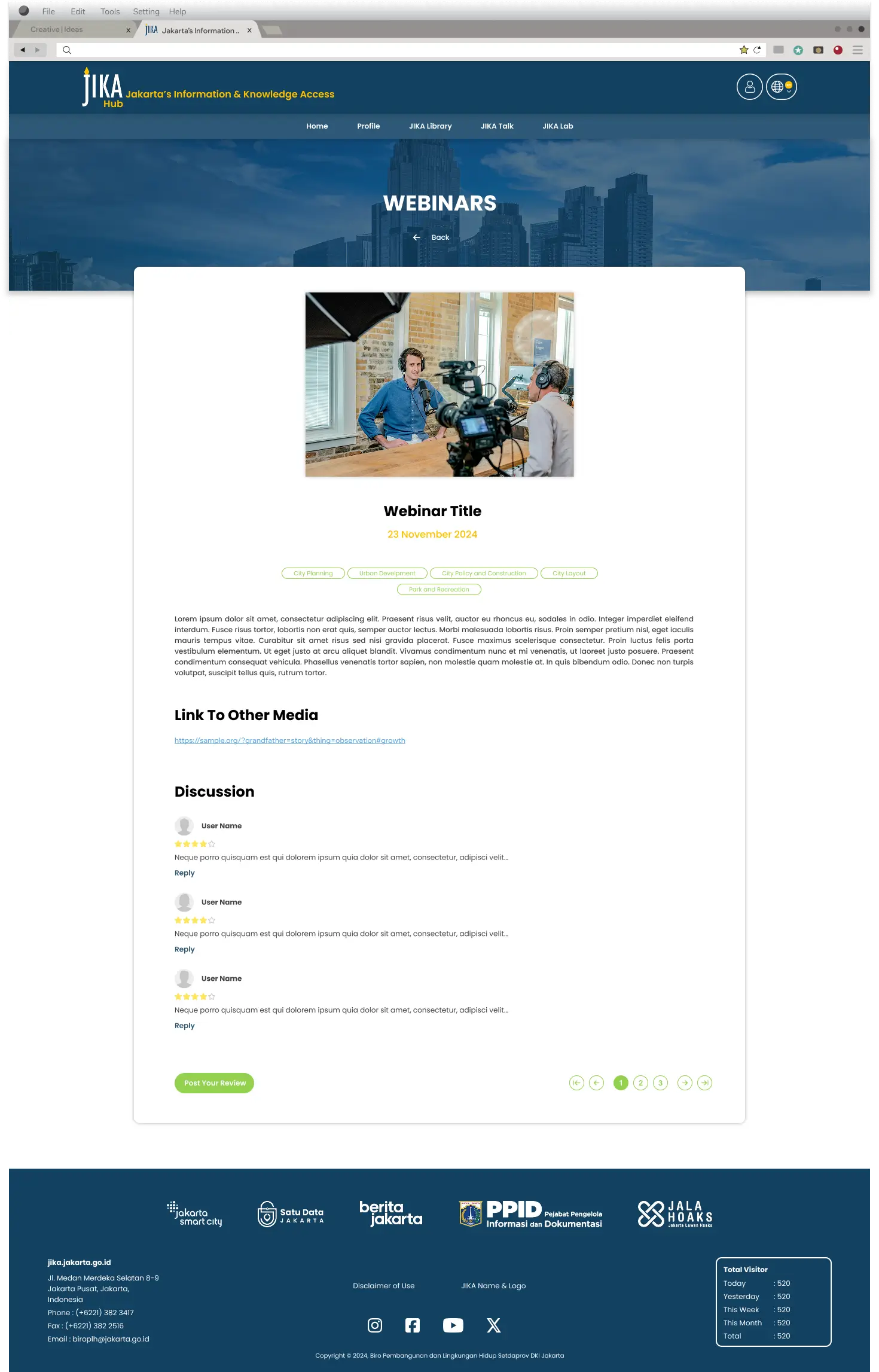
- Content sections are clearly segmented to help users quickly identify and navigate between the library, events, podcast, webinar, and innovation features without feeling overwhelmed by the platform's breadth.
- The upload and submission flow for the Innovation portal was designed to be straightforward and transparent — guiding users through the contribution process with clear steps and expectations at each stage.
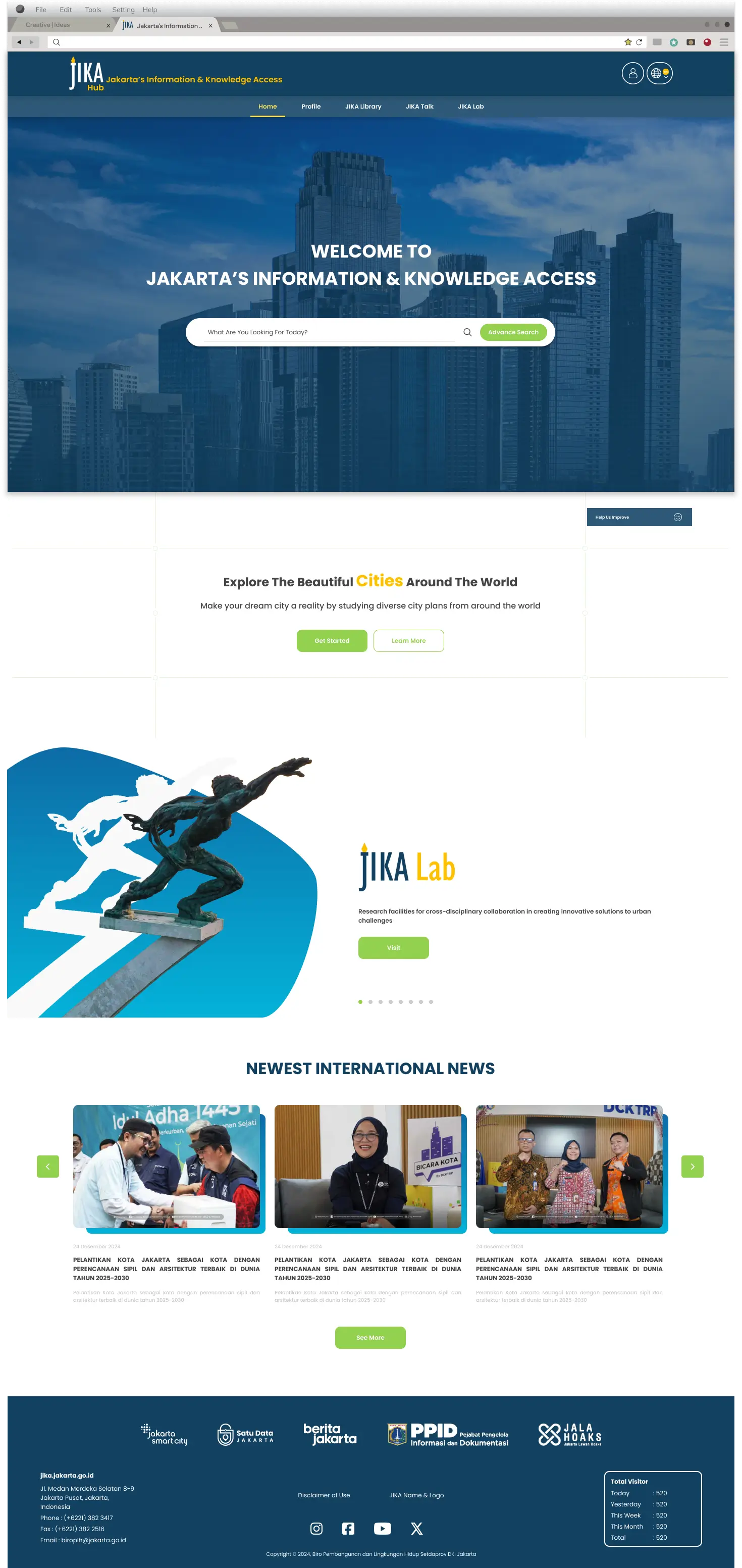
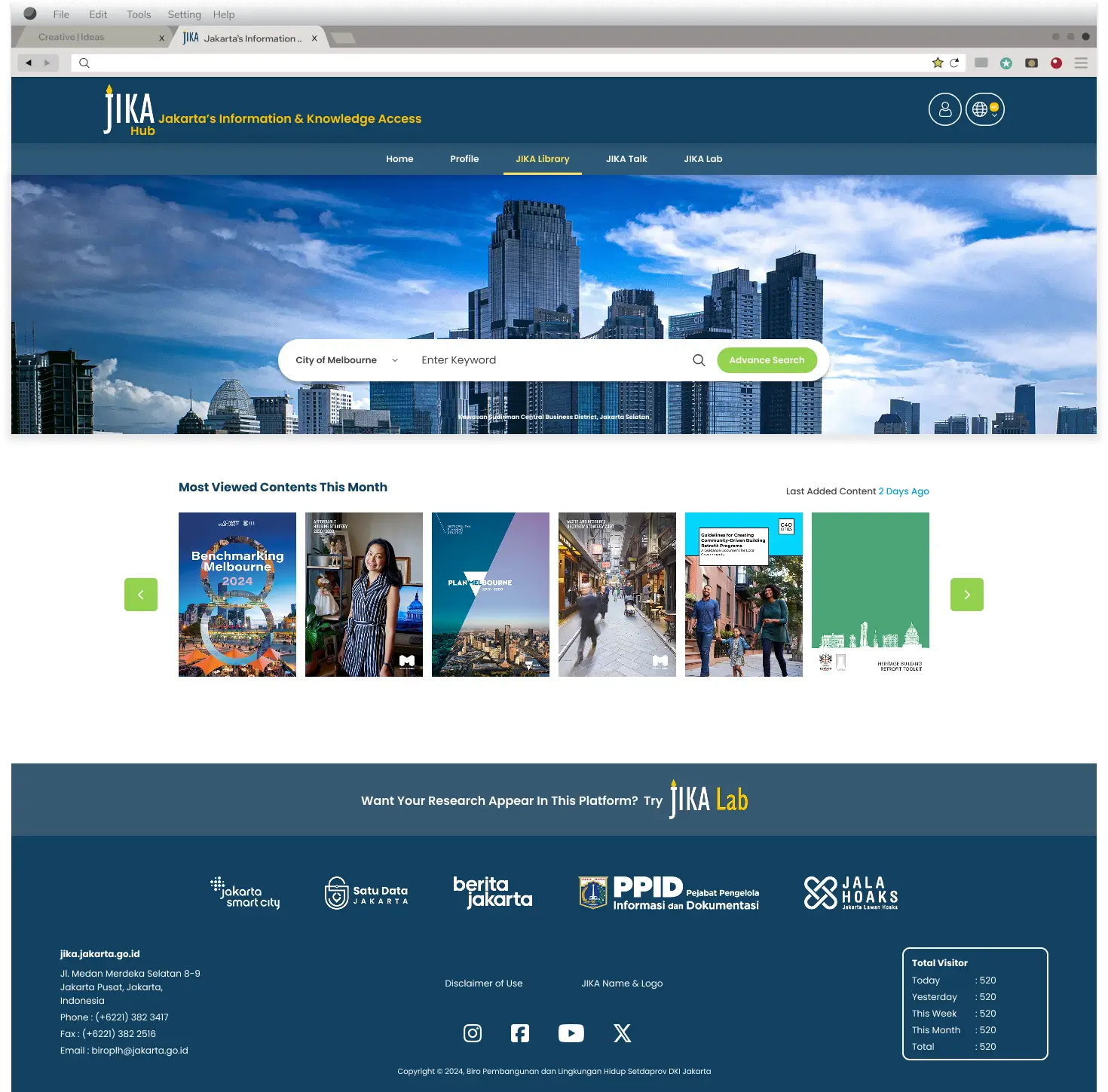
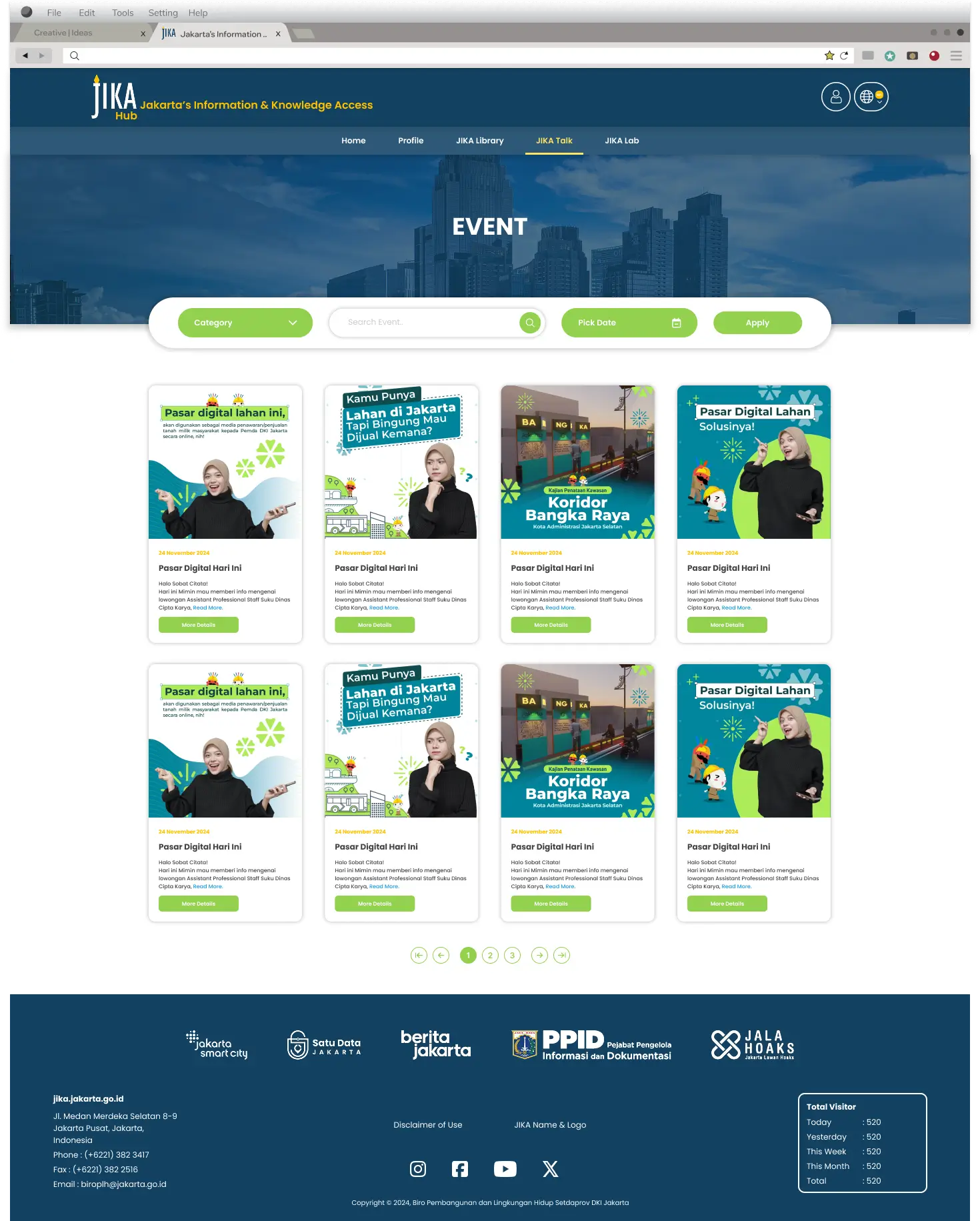
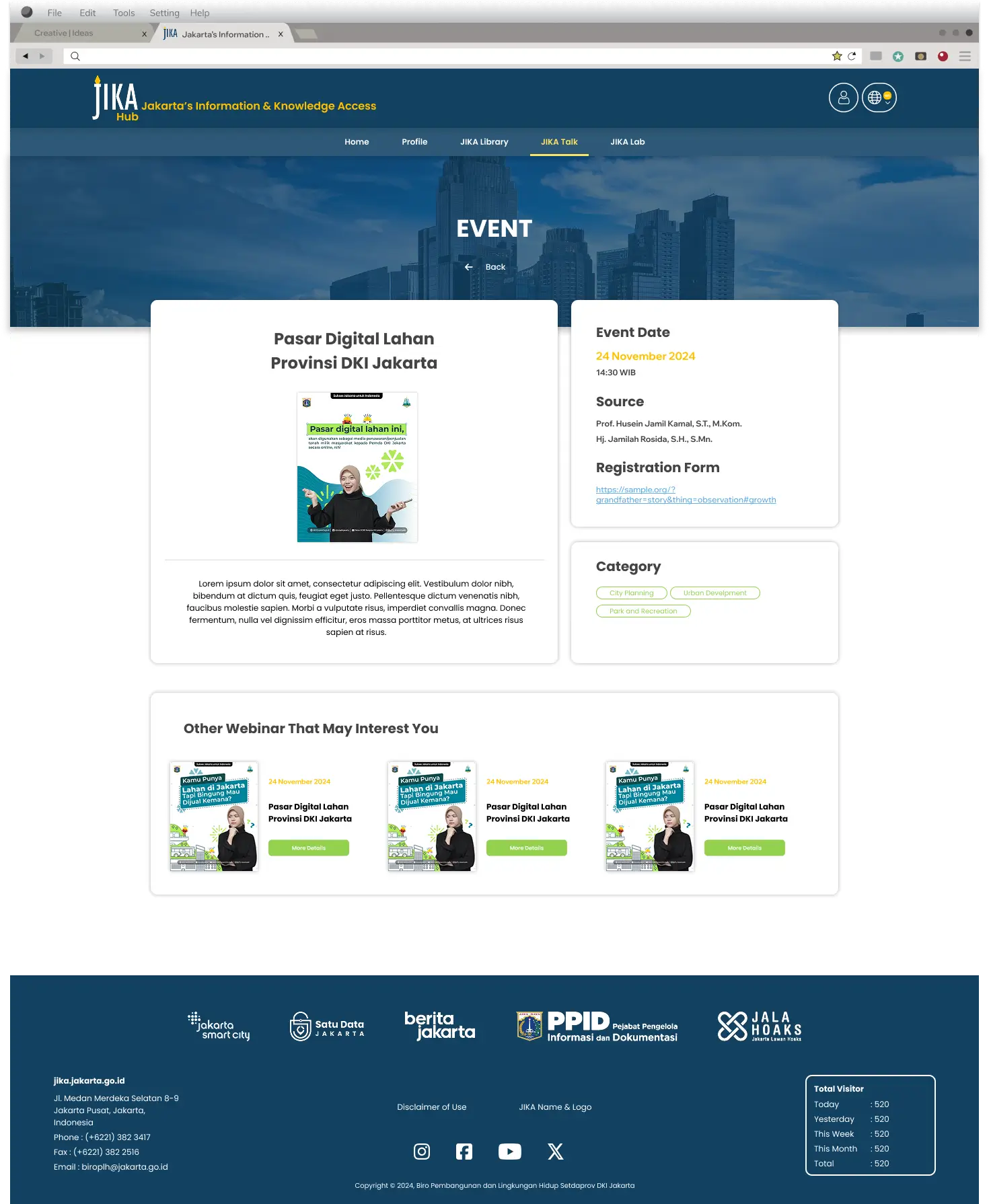
Link Interactive Prototype Figma : View Prototype
Result & Impact
- The platform launched successfully and is actively used and regularly updated by Biro PLH DKI Jakarta as their official knowledge and innovation hub.
- Centralized access to urban planning literature from cities around the world into a single platform — giving researchers, students, and government staff a resource that previously did not exist in the bureau's digital ecosystem.
- The user contribution feature empowers the public and academic community to actively participate as knowledge contributors — not just consumers — creating a living, growing content ecosystem over time.
- The platform now serves as an official digital portfolio for Biro PLH DKI Jakarta, documenting their research activities, events, and institutional innovations in one accessible location.
Reflection
This project taught me the importance of designing for content diversity — where a single platform needs to serve fundamentally different user needs simultaneously. A researcher looking for downloadable literature, a professional registering for a webinar, and an academic submitting a journal all have very different goals and expectations. Designing a unified interface that feels coherent and intuitive across all of those journeys — without overwhelming any individual user — was the core design challenge, and one that sharpened my thinking around information architecture significantly.
Future Improvements
- Progressively activate all features currently in development — Laboratory, Podcast, Webinar, and Innovation — with a clear public roadmap so users know what's coming.
- Introduce a content recommendation system based on user reading history and stated areas of interest to improve content discovery and return visits.
- Build an advanced search and filter system allowing users to find literature by city, topic, publication year, and language — making the library far more navigable as the content volume grows.
- Develop a notification system to alert users when their submitted journal has been reviewed, approved, or published by the bureau.
- Explore a companion mobile app to make the platform accessible beyond desktop — particularly for event attendees and podcast listeners who prefer mobile consumption.