Akademi Militer - VR Simulator
Designing an immersive military training simulator using Virtual Reality technology to digitize curriculum-based learning for cadets at the Indonesian Military Academy.
UI/UX Designer
Virtual Reality
Adobe Illustrator

Adobe Photoshop
5-7 Months
Project Overview
- The Indonesian Military Academy (Akademi Militer Indonesia) commissioned this project to create an interactive learning media experience capable of replacing certain manual, classroom-based training materials with an immersive digital format using VR technology.
- In this project I served as UI/UX Designer, Photographer, and Videographer — responsible for building the UI concept, collecting and curating training materials on-site, compiling curriculum content, and producing all design mockups used within the system.
- I travelled directly to Magelang together with the Project Manager, Sales team, and Videographer to conduct on-site material collection — ensuring all content accurately reflected the academy's real training environment and curriculum.
- The system was designed specifically as a digital learning medium — with the goal of delivering curriculum-accurate training simulations that allow cadets to fully grasp theoretical and practical material before working with real equipment.
Role & Scope
- Served as UI/UX Designer with an extended scope that included on-site photography, videography, and content curation — going beyond conventional design responsibilities to ensure the accuracy and quality of all content integrated into the system.
- Focused on concept development, material compilation, asset creation, and final mockup delivery across the entire VR learning experience.
- Collaborated on-site in Magelang with the Project Manager and production team during the material collection phase.
Background
- The Indonesian Military Academy identified that several theory and practical training modules could be significantly enhanced — and made more accessible — through digital simulation using VR technology.
- A purpose-built VR learning media was needed that could accurately cover the full curriculum, providing cadets with a realistic and immersive preparation experience before engaging with real-world training equipment and scenarios.
Problem Statement
User Flow
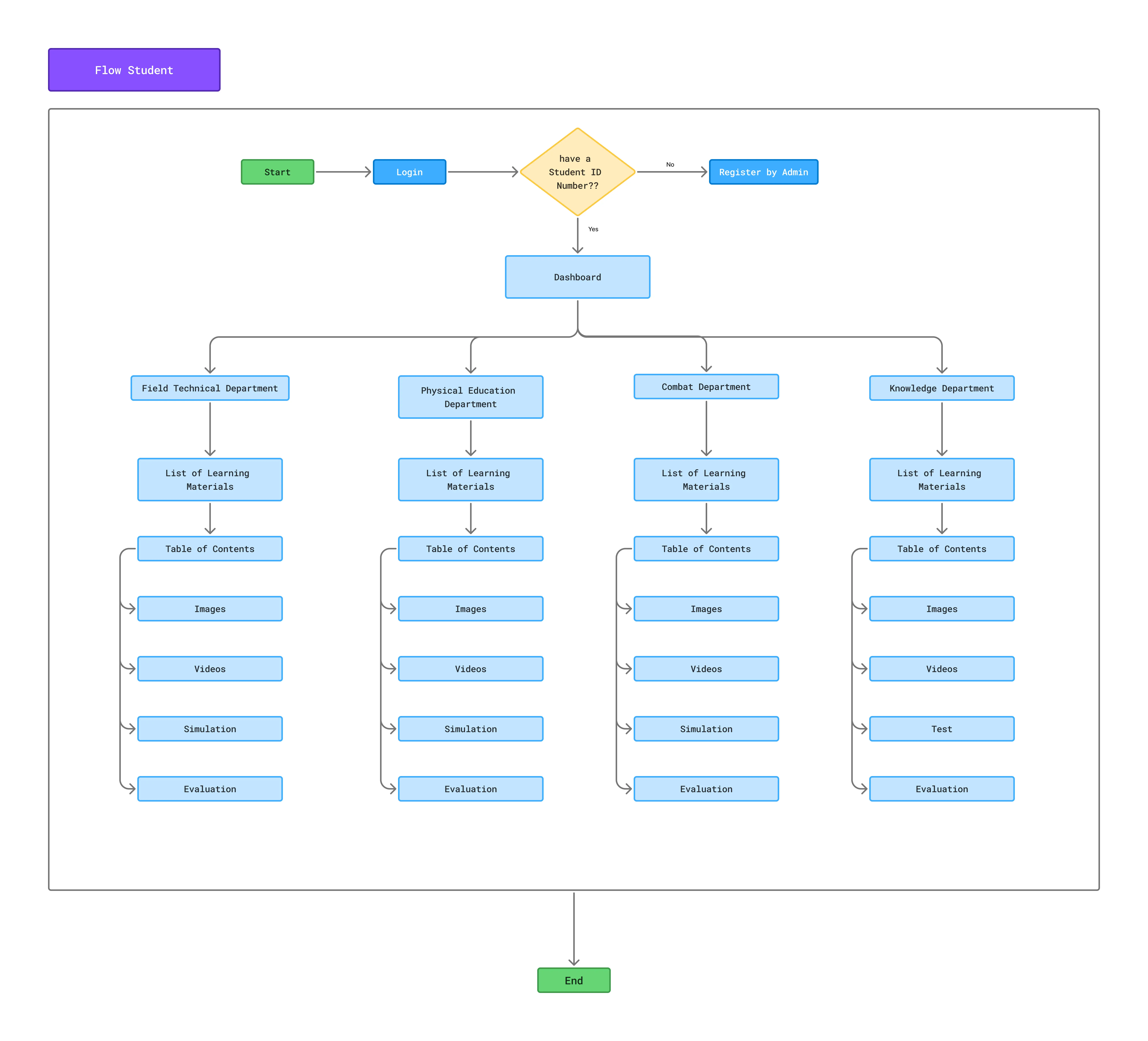
To understand how cadets interact with the system, a user flow was created mapping the complete experience — from launching the application through to accessing all available training modules and features.
Final Design
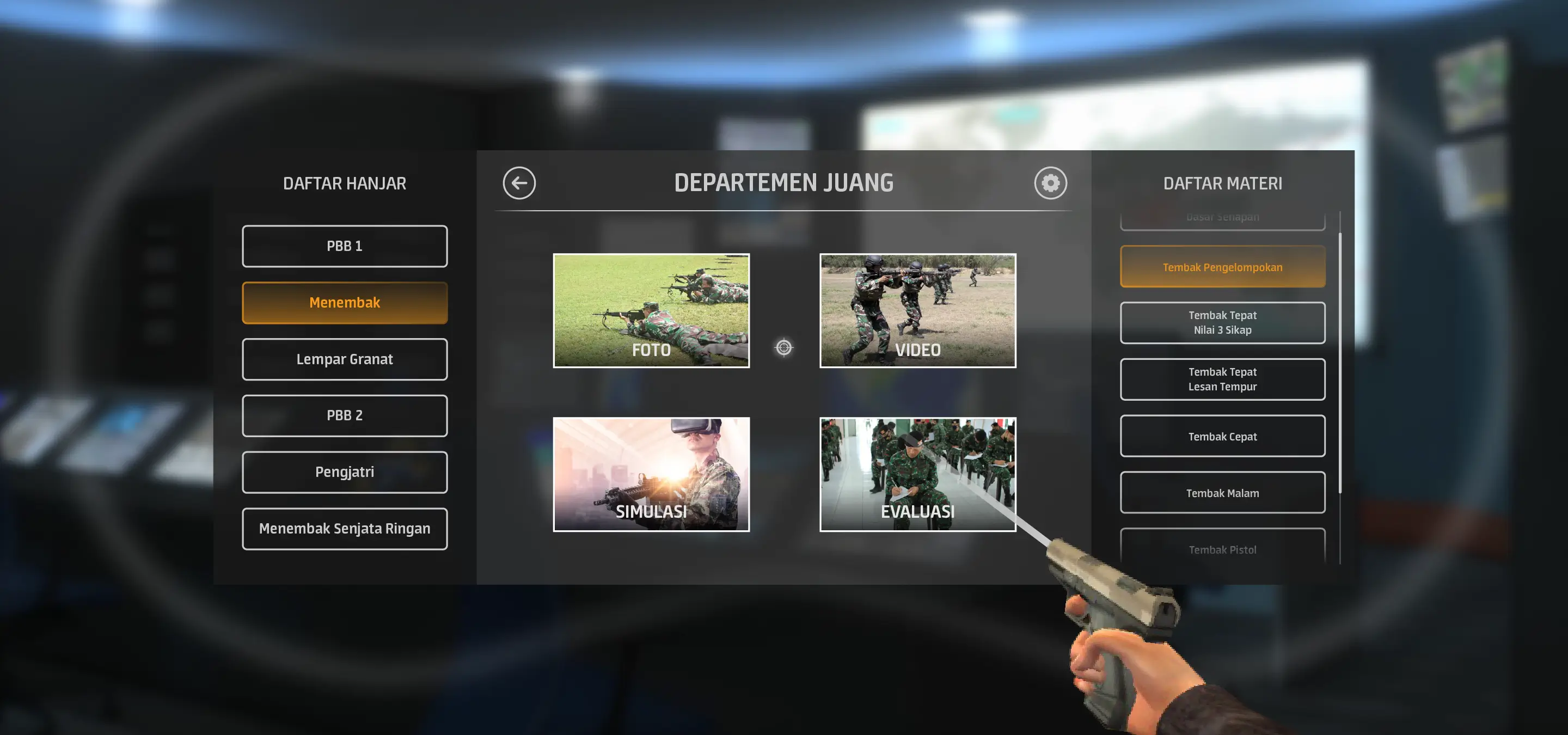
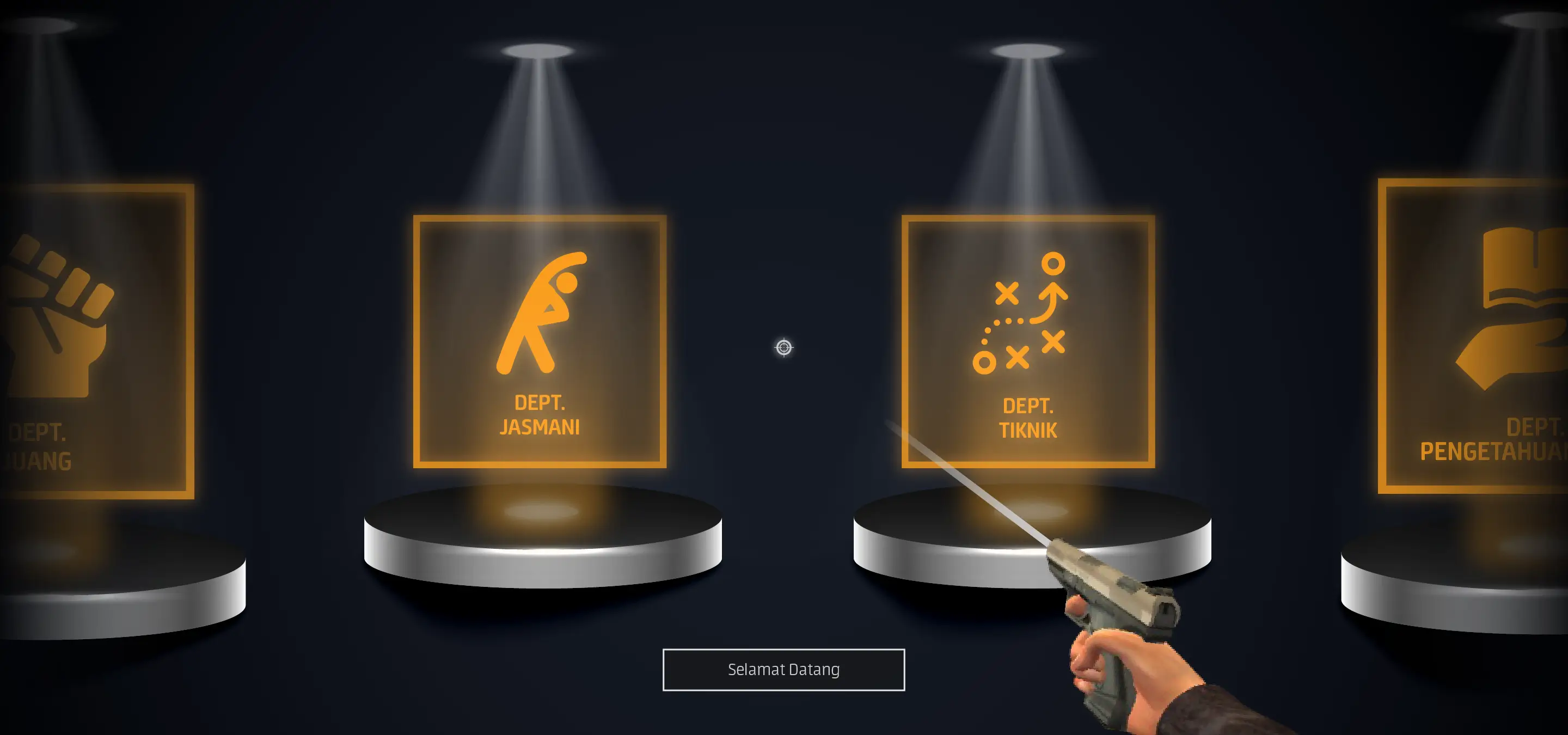
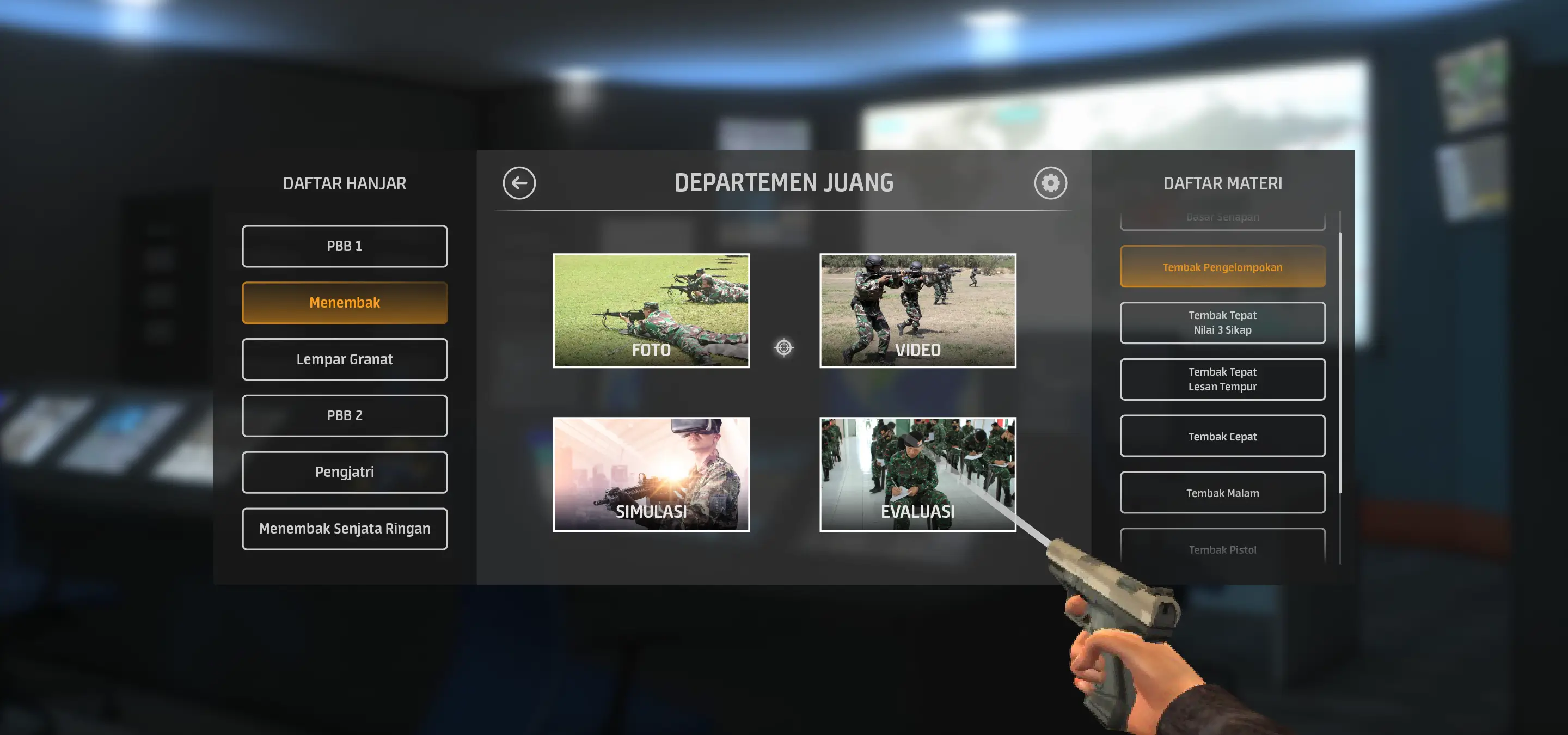
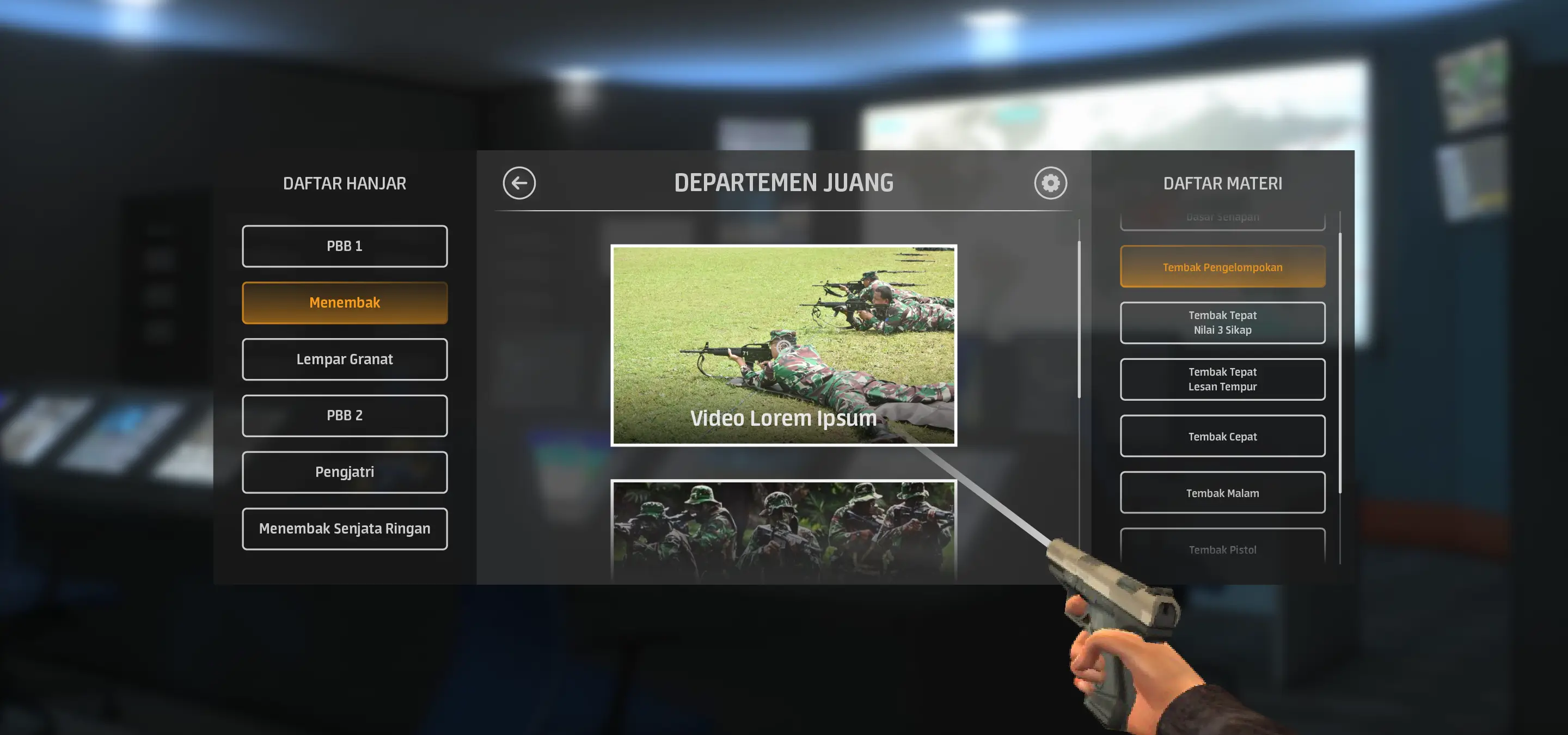
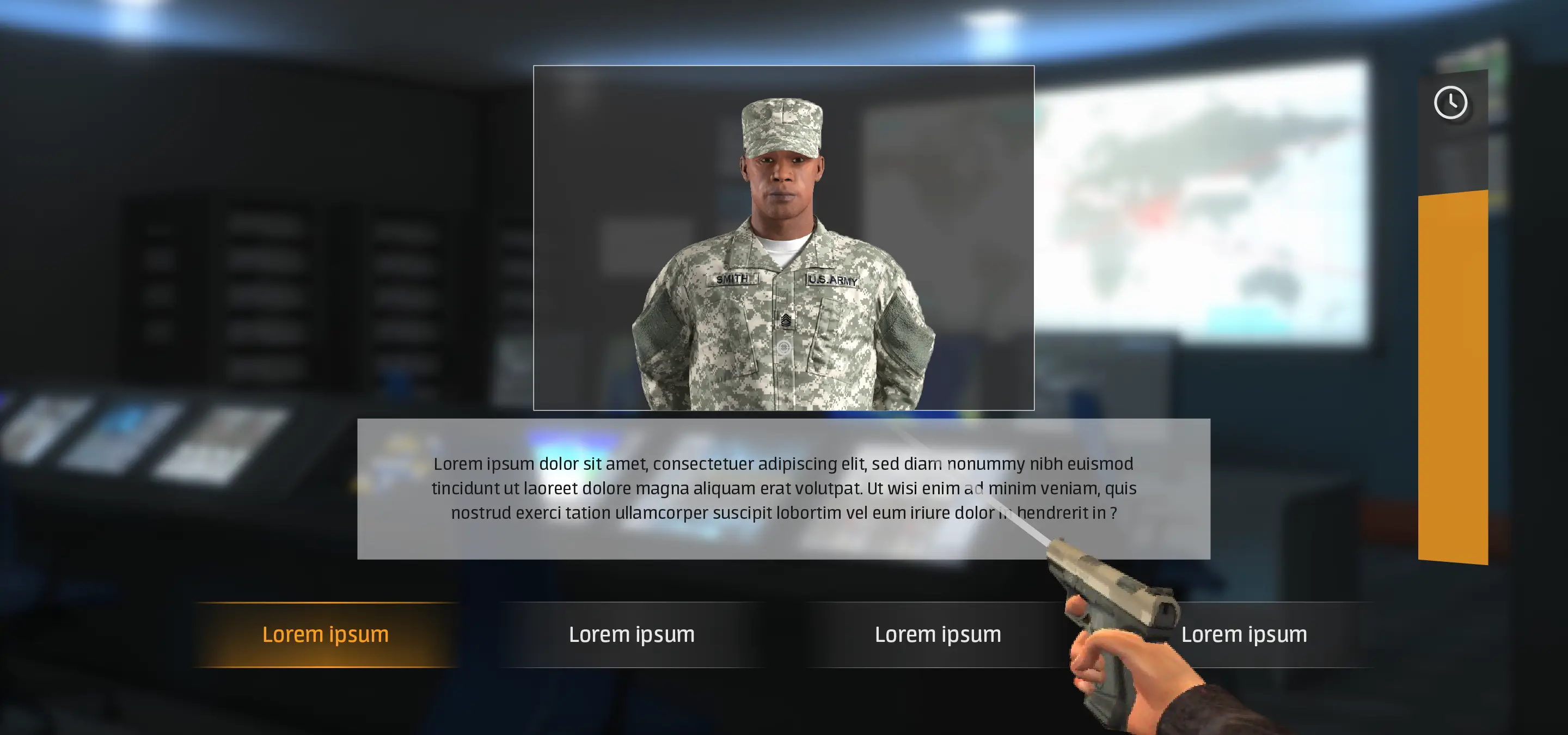
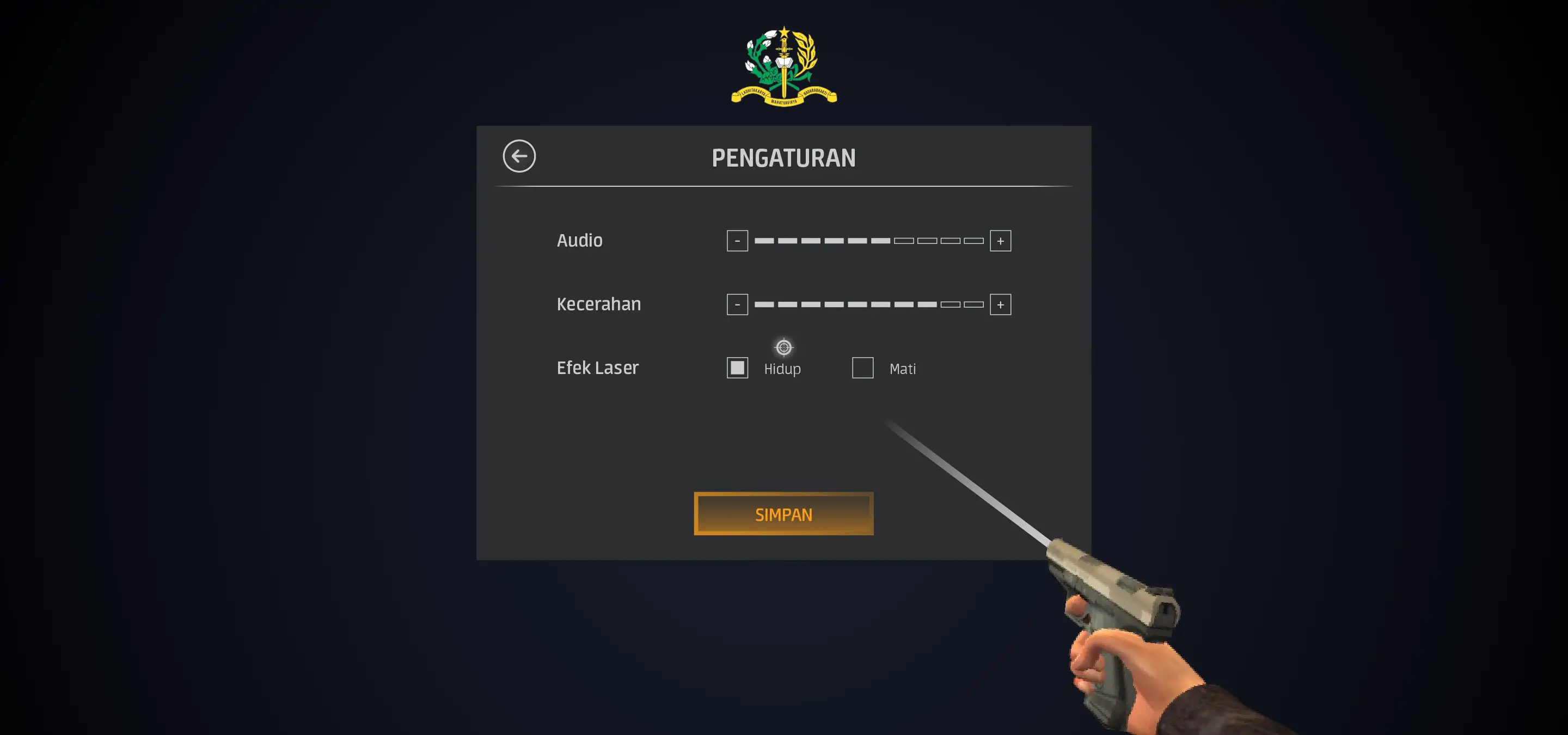
- The final design adopts a bold, military-grade visual theme — dark backgrounds with a headquarters aesthetic, conveying authority, precision, and operational seriousness appropriate for a military training environment.
- Because the VR experience takes place in a three-dimensional space, all UI components, menus, and navigational elements were designed in bright gold and amber tones — ensuring high contrast and clear visibility against the dark 3D environment from any viewing angle within the headset.
- The interface was built to be immediately navigable by cadets without prior technical instruction — keeping interactions simple, direct, and focused entirely on accessing training content efficiently.
Result & Impact
- The VR simulator was successfully completed and is actively deployed and in use at the Indonesian Military Academy in Magelang.
- Training materials that were previously manual and limited in scope can now be delivered digitally — more freely, more immersively, and in a format that is significantly easier for cadets to absorb and retain.
- I conducted a direct on-site field trip to Magelang to collect training materials, photographs, and video footage — ensuring all content within the system is accurate, curriculum-aligned, and reflective of the real training environment.
- This project demonstrated my ability to work across multiple disciplines within a single engagement — combining UI/UX design, content strategy, on-site photography, and videography to deliver a complete, production-ready system.
Reflection
Working on this project required me to be genuinely versatile — picking up a camera to shoot photos and video on a military base one day, and translating that raw content into a polished VR interface the next. It was a demanding but deeply rewarding experience, and one that taught me how much stronger the design output becomes when the designer is directly involved in the content gathering process. Understanding the real environment the cadets train in — rather than working from second-hand descriptions — made every design decision more grounded and purposeful.
Future Improvements
- Add new training modules on an ongoing basis as the academy's curriculum evolves or expands.
- Integrate individual progress tracking so instructors can monitor each cadet's learning development and identify areas that may need additional attention.
- Develop a repeatable drill mode with varied scenarios and difficulty levels — training cadets to adapt quickly rather than memorizing a single fixed sequence.
- Expand the simulation to cover additional practical training subjects not yet included in the current version.
- Optimize graphical performance to ensure the experience runs smoothly across a wider range of Oculus device specifications.