Konektivitas Budaya Jalur Rempah - Kemendikbud
Designing an interactive learning media experience that educates visitors on the historical spice trade routes and cultural connections of the Nusantara era across Indonesia.
UI/UX Designer
Interactive Wall / Table

Adobe Illustrator

Adobe Photoshop
7-8 Months
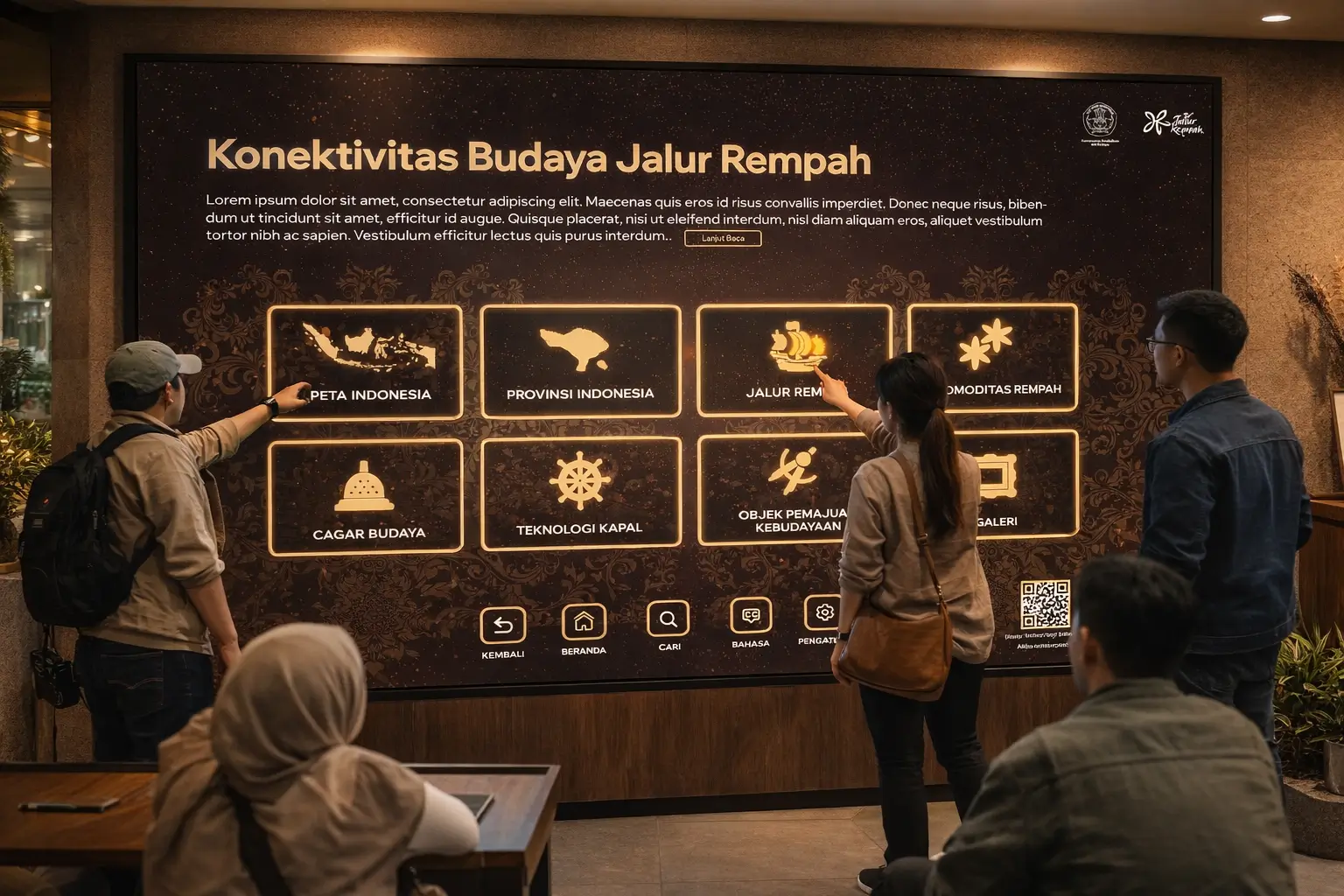
Project Overview
- This project was commissioned by the Indonesian Ministry of Education and Culture (Kemendikbud) — designing an interactive media experience to educate the public on the historical spice trade routes of the Nusantara era, covering the influence and journeys of Arab, Dutch, and Chinese traders across the Indonesian archipelago.
- I was assigned to this project as a freelance designer through my company at the time. My role was to handle the full design process — from concept development and interface design, through to asset creation and design delivery.
- I worked alongside a team consisting of a Project Manager, Unity Developer, and Backend Dev throughout the production process — collaborating across concept, illustration, and interface design stages.
Role & Scope
- Served as UI/UX Designer — responsible for the overall interface concept, interaction design, and visual system across the platform.
- Worked as one of the designers within a small creative team, contributing directly to concept development, asset creation, and interface mockup delivery.
- Collaborated alongside a Project Manager and other team members, with tasks distributed across the team based on individual specialization.
Background
- There was a recognized need to present the history of Indonesia's spice trade routes in a format that was both accessible and engaging — moving beyond static textbook content to reach broader and more diverse audiences.
- The Ministry of Education and Culture sought an interactive solution that could bring this historical narrative to life in museum and exhibition environments — making it compelling for visitors of all ages.
Problem Statement
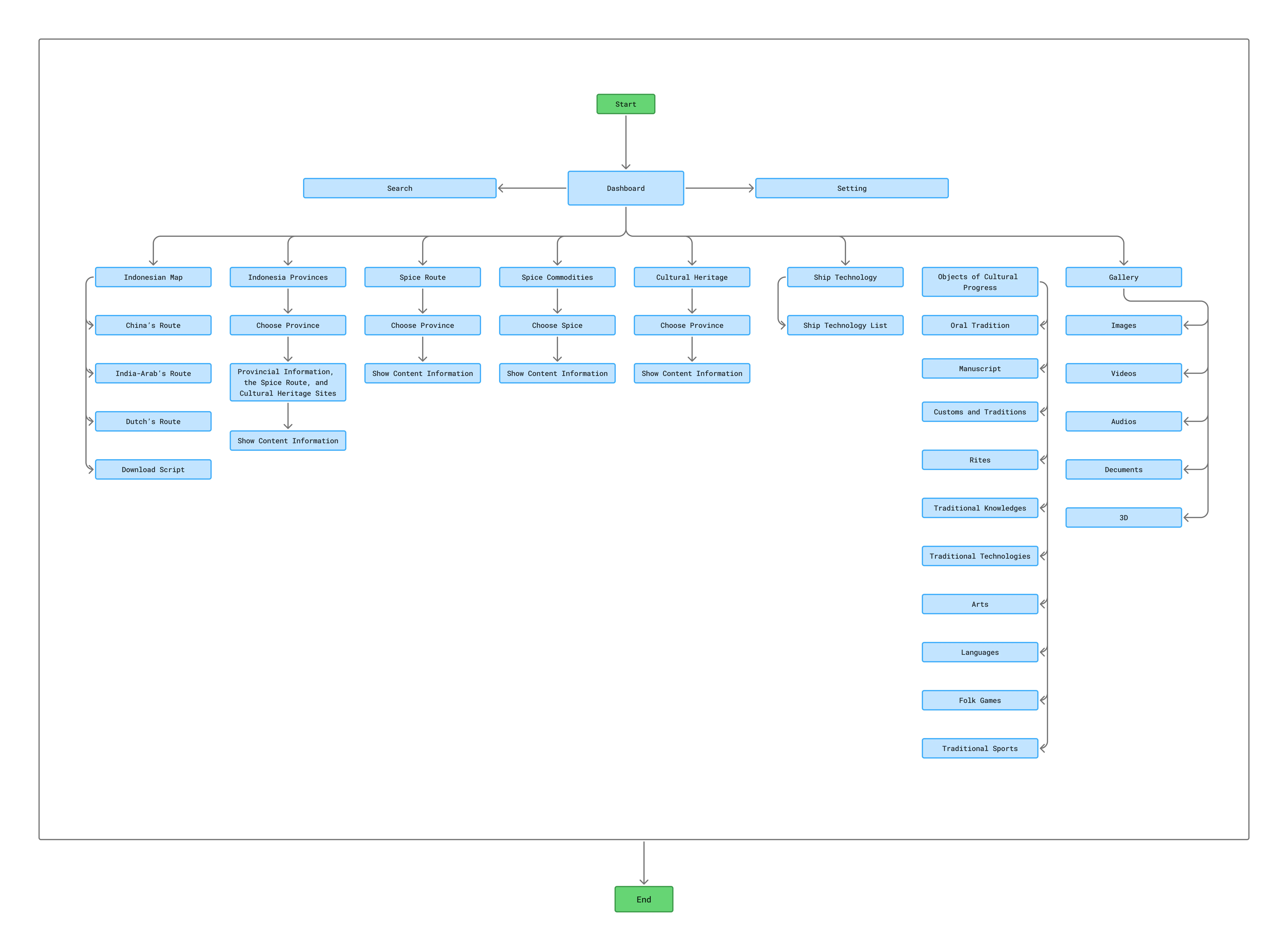
User Flow
To understand how visitors navigate the experience, a user flow was created mapping the complete interaction journey — from entry point through to content exploration across all available modules.
Wireframe
Given the nature of the physical installation format, wireframes focused on establishing the spatial layout and interaction zones for the interactive wall and table — ensuring the experience would be intuitive for walk-up users with no prior instruction.
Final Design
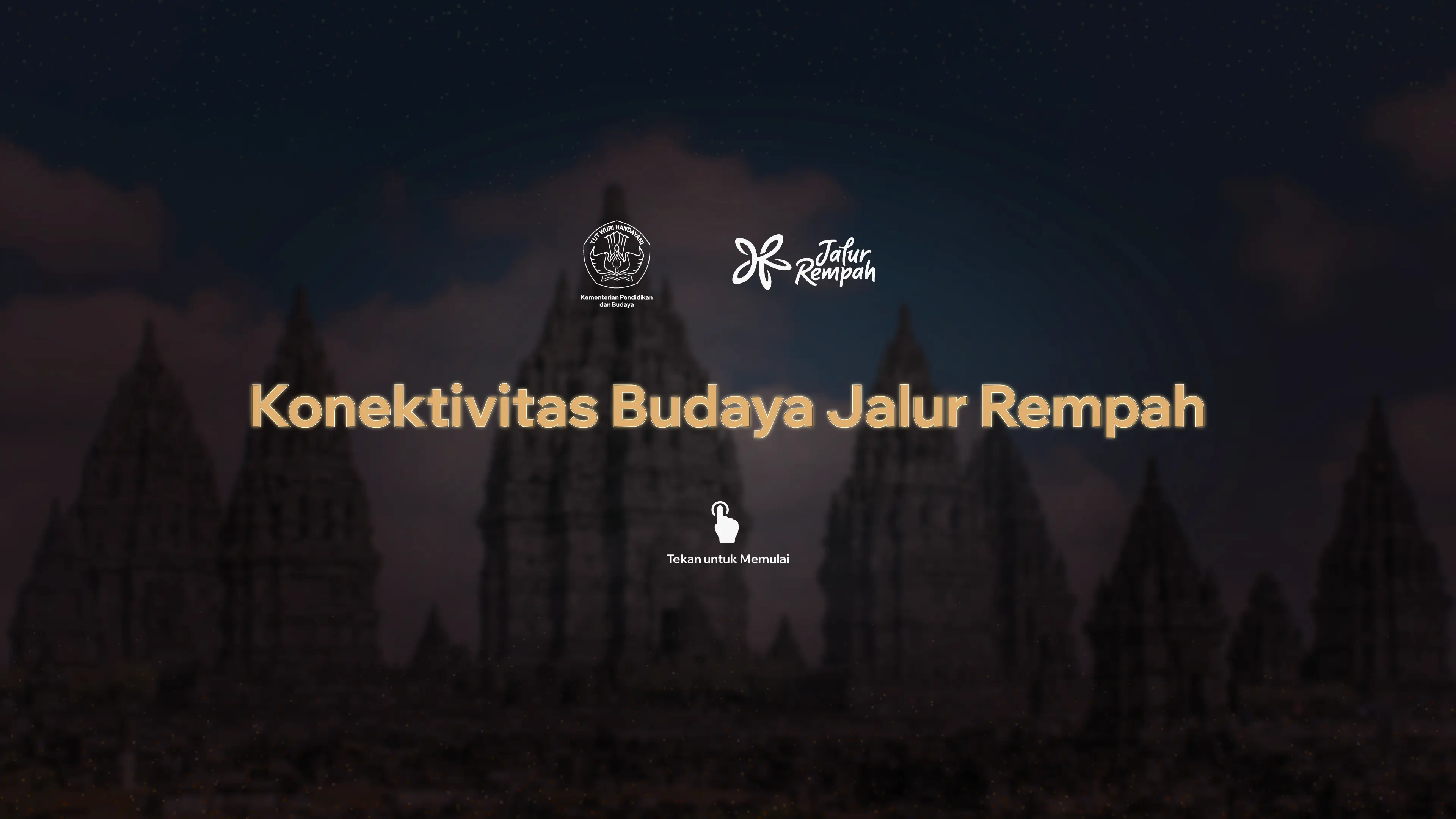
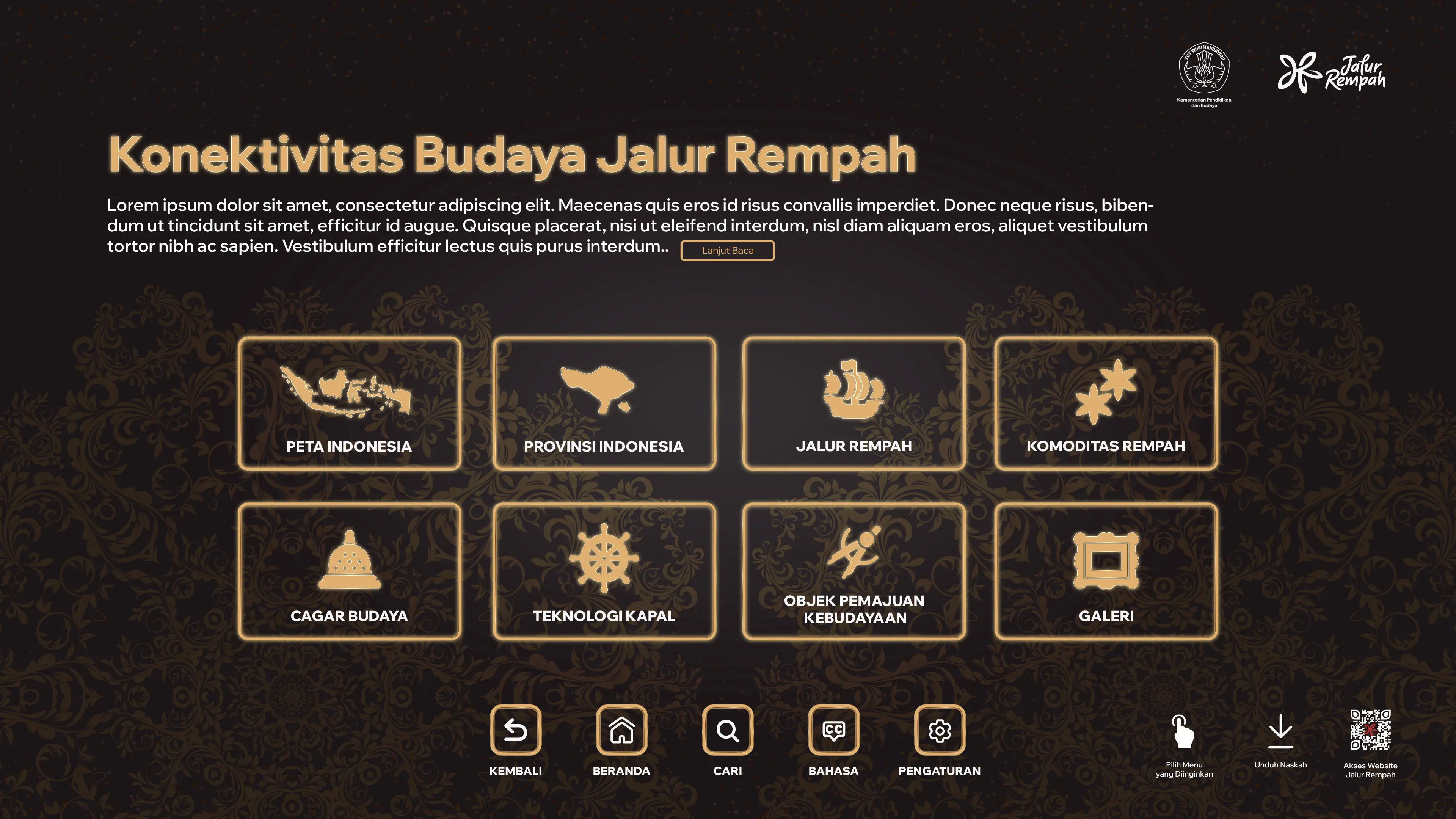
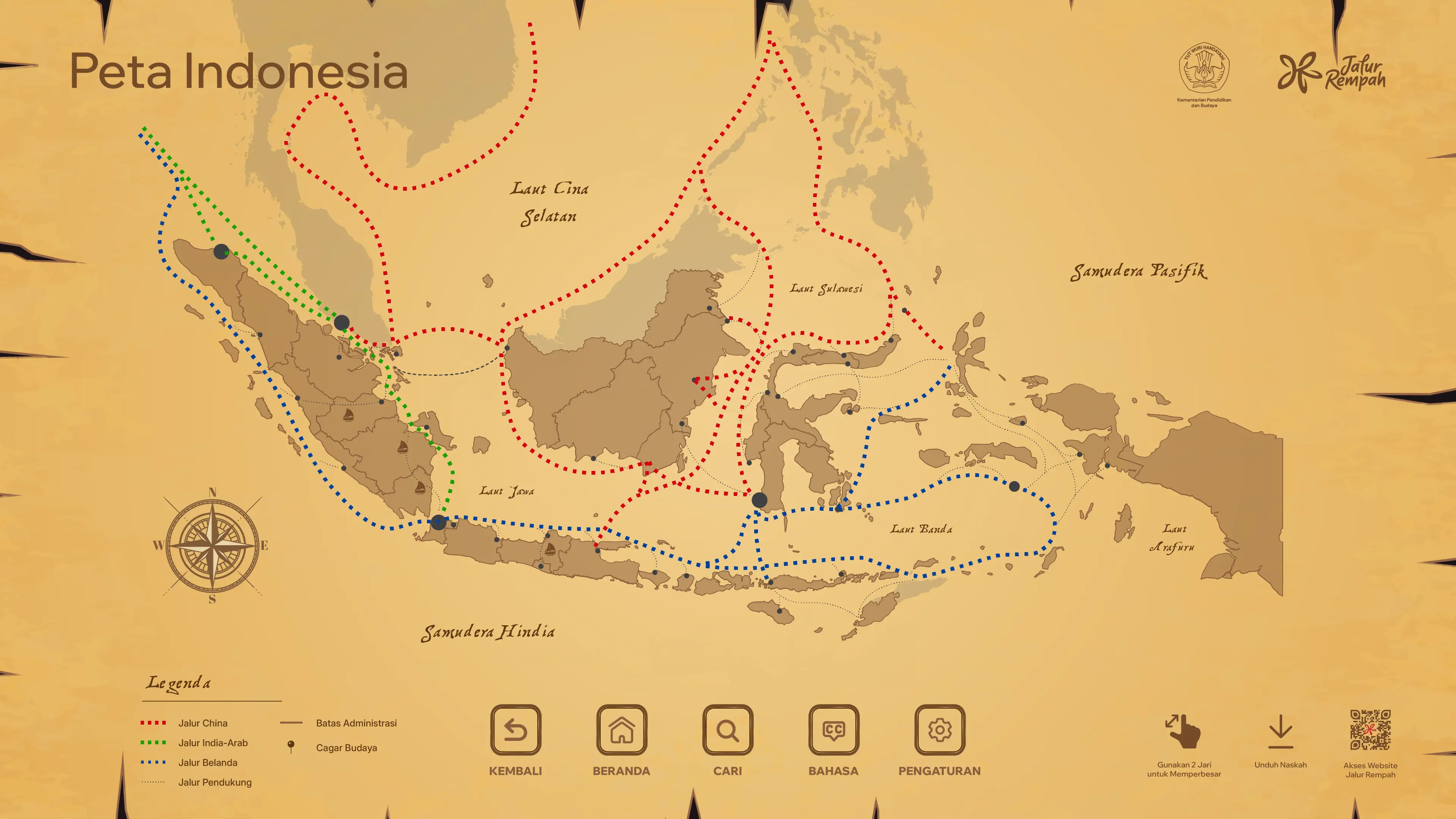
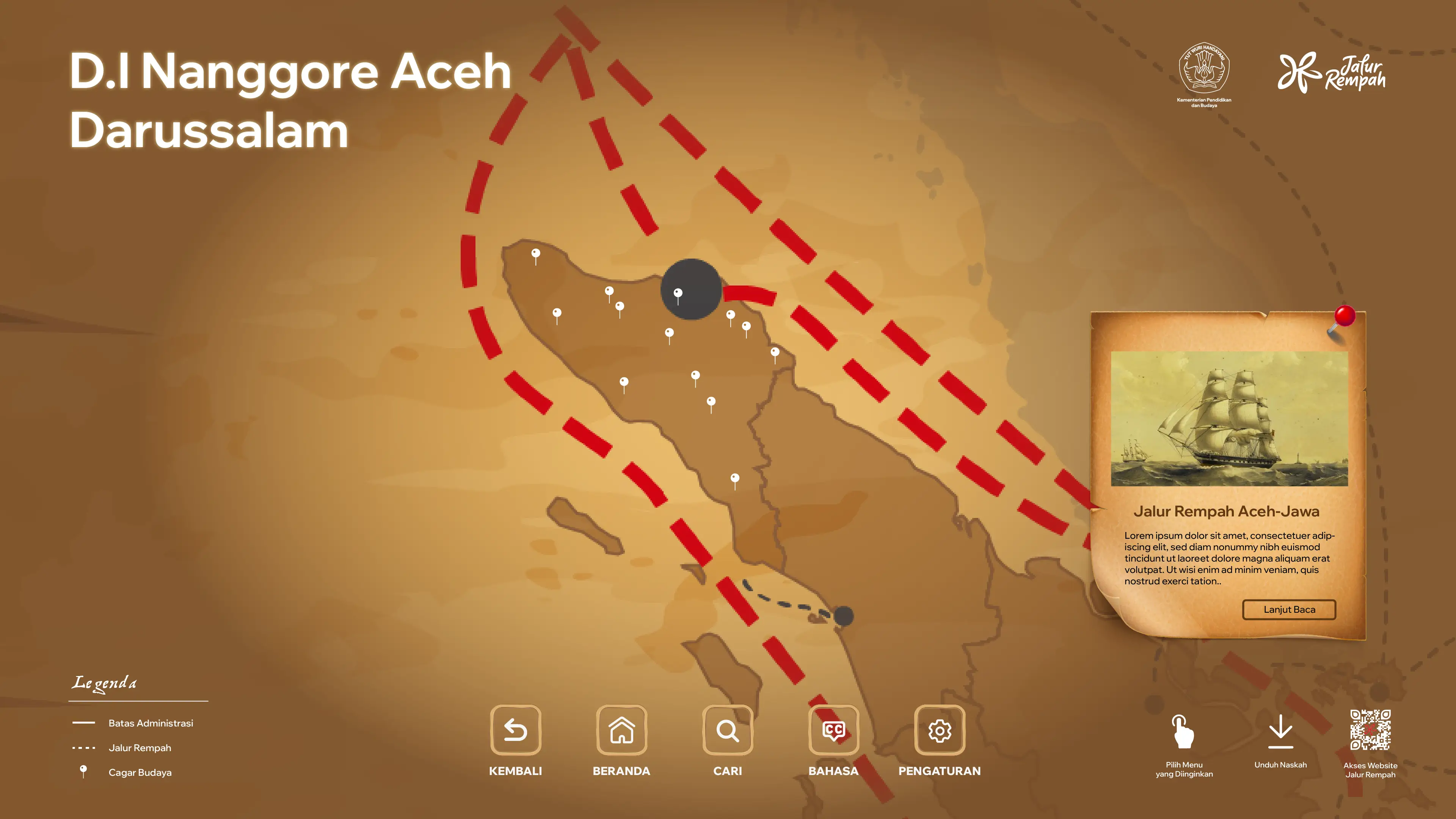
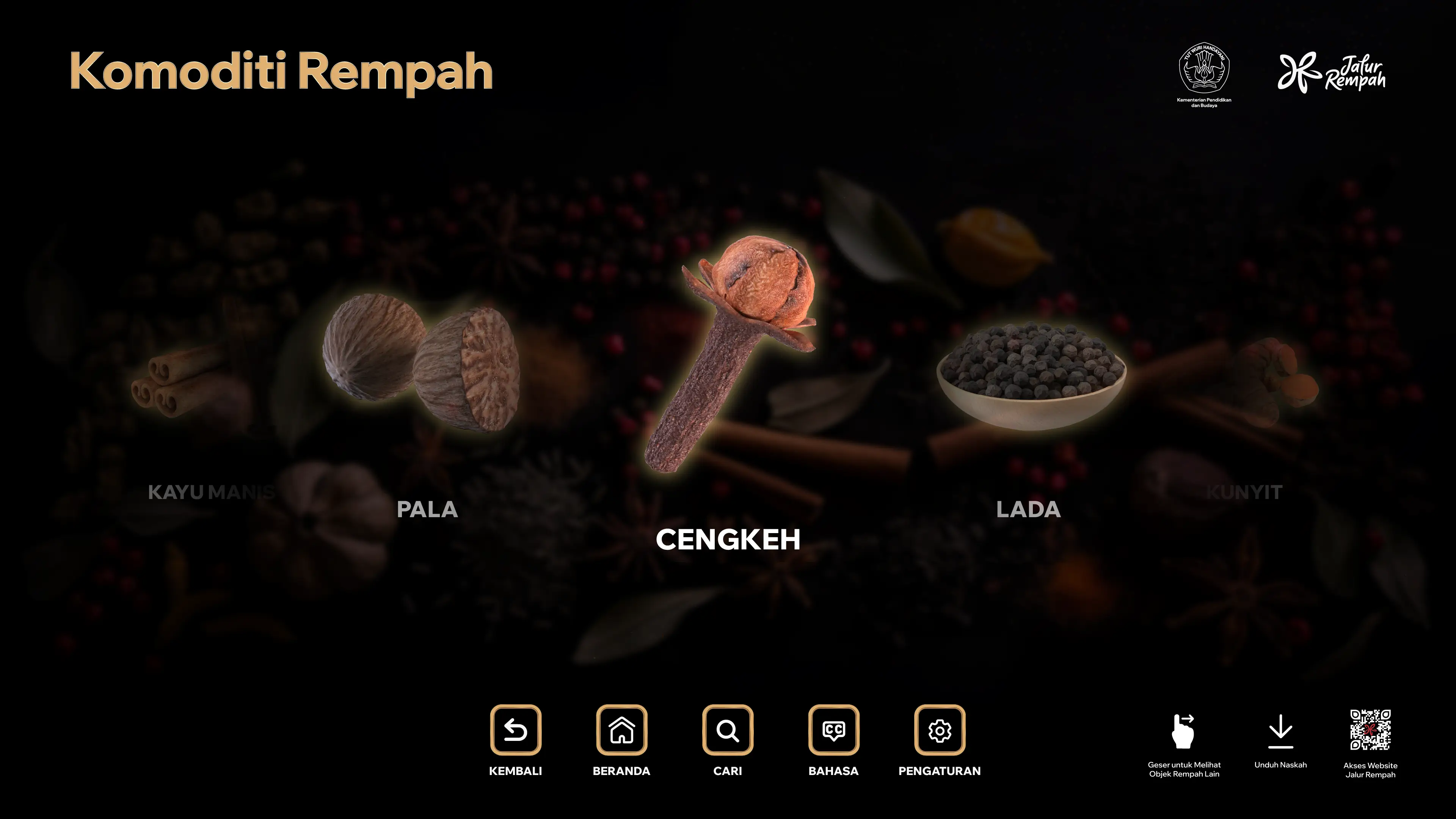
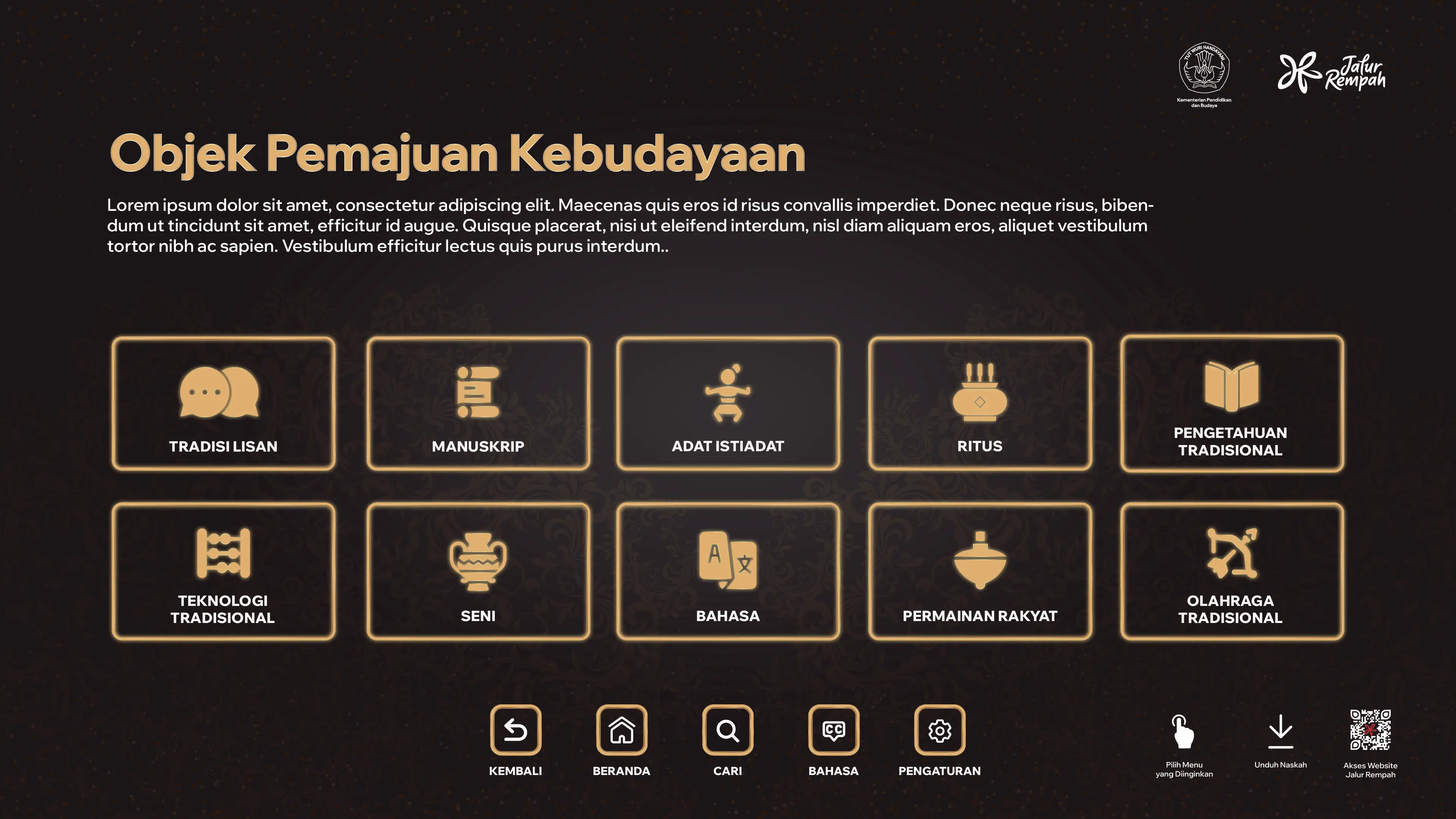
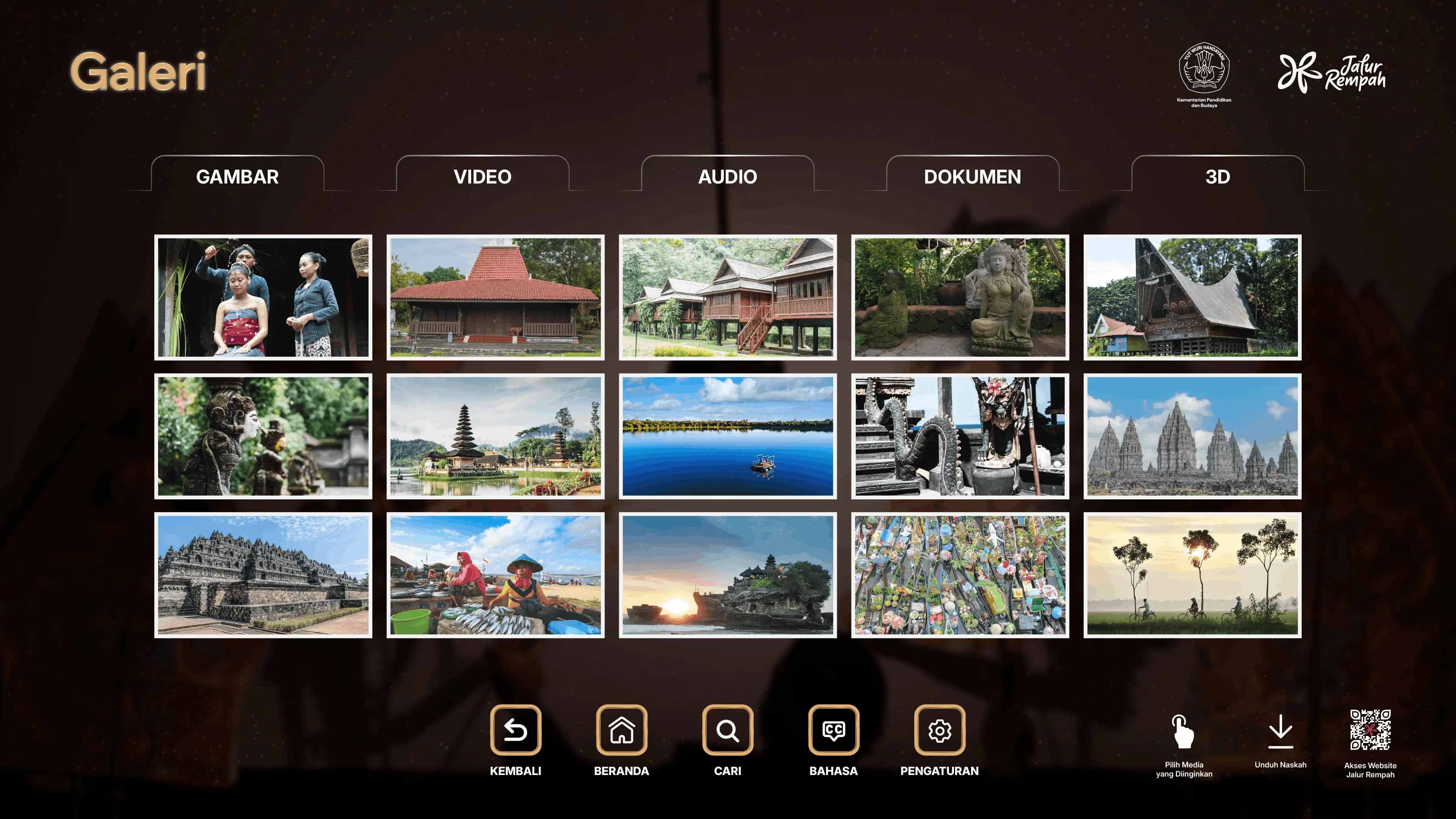
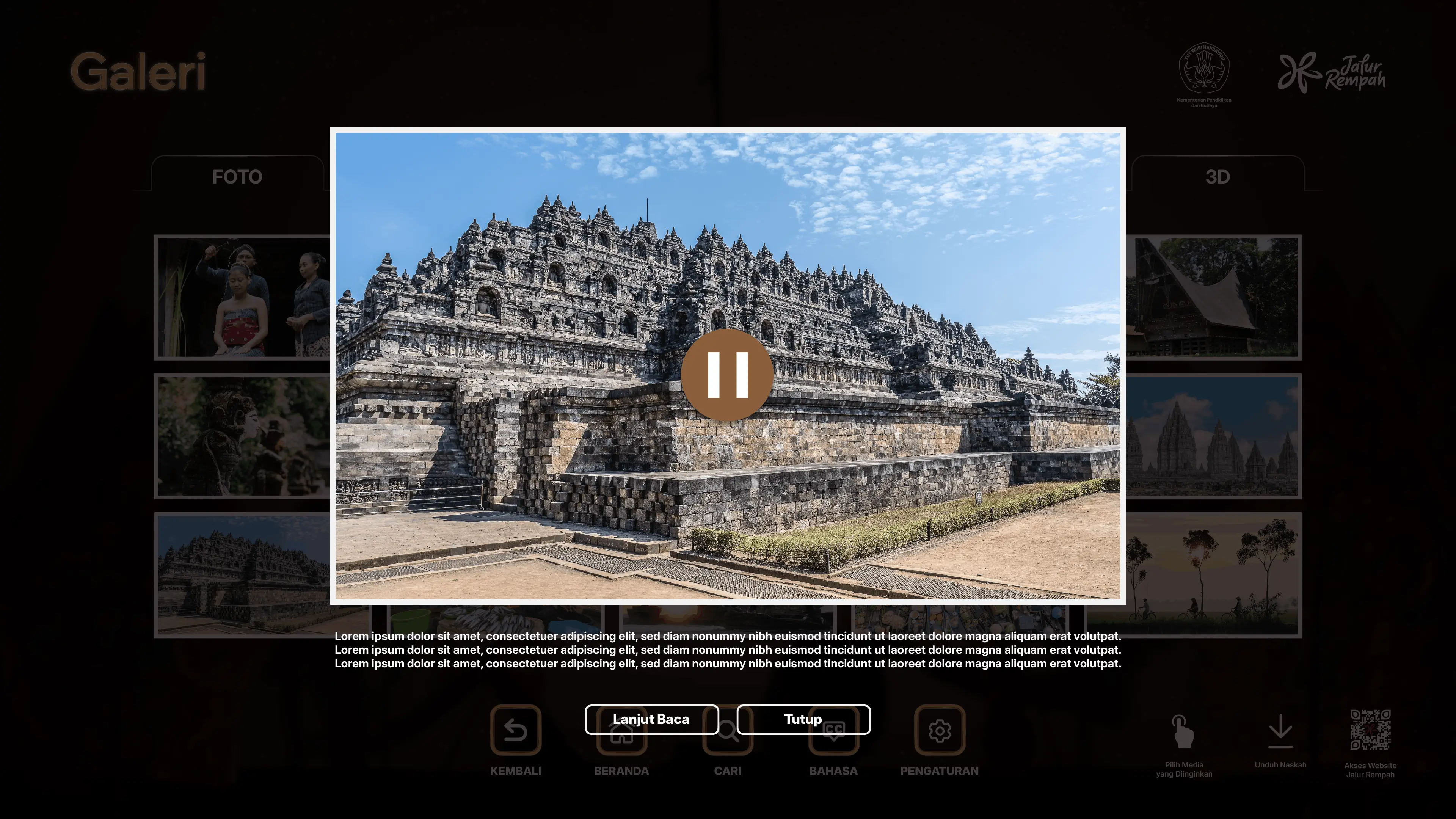
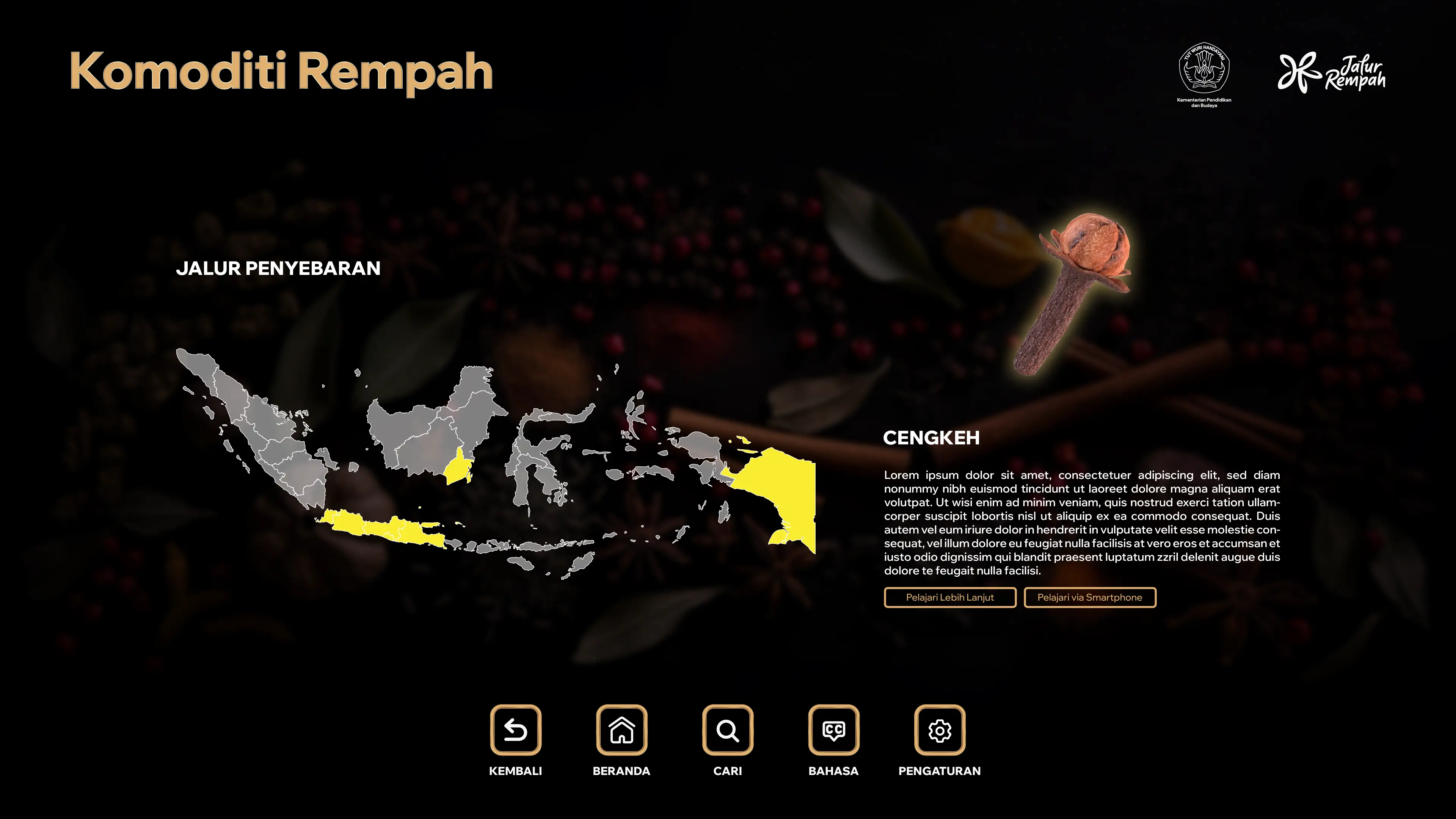
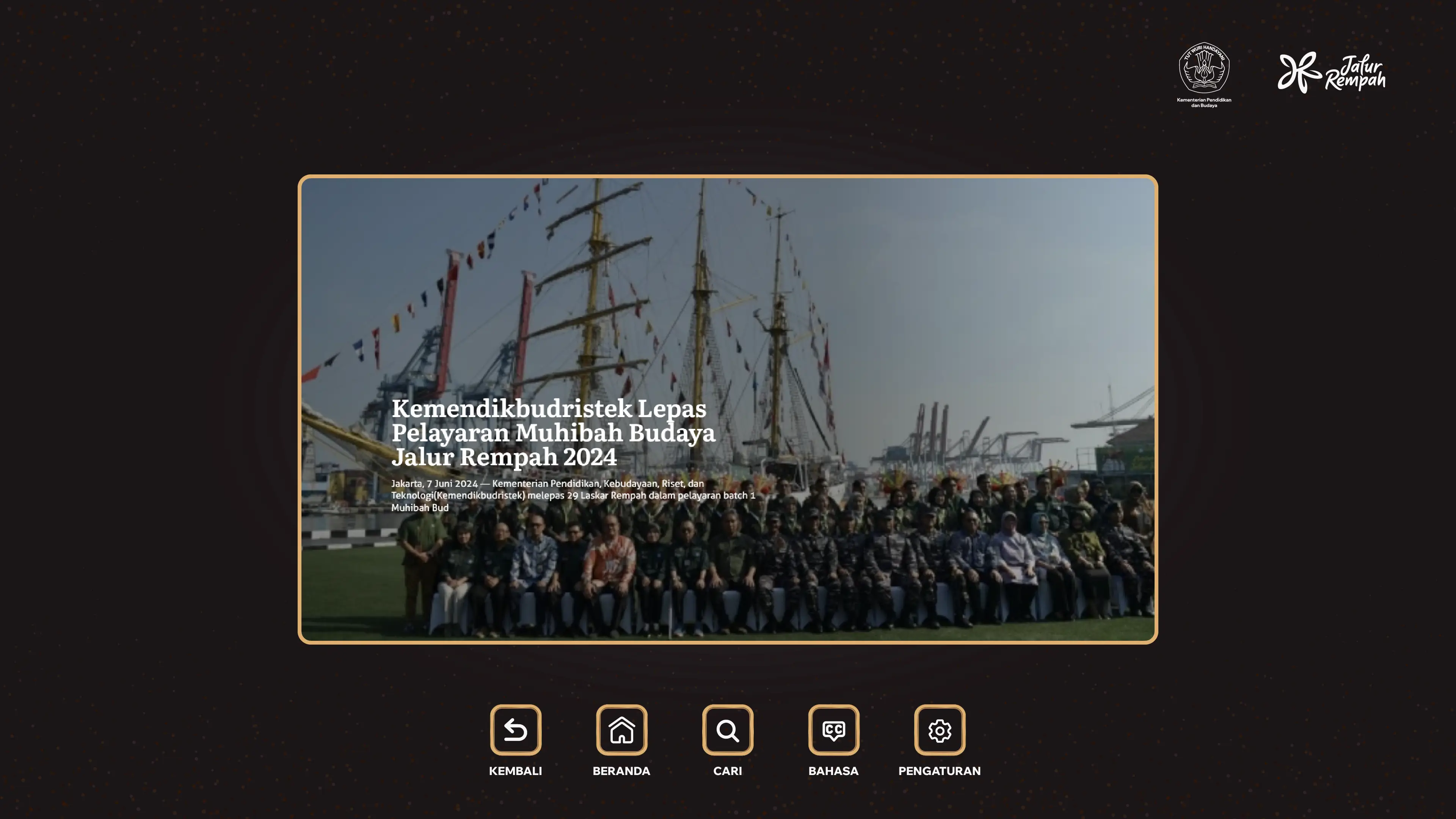
- The final design uses a rich, earthy color palette — deep browns, aged golds, and warm amber tones — evoking the historical texture of the Nusantara era while maintaining a clean, contemporary interactive interface.
- Each content module — spice commodities, trade route maps, cultural artifacts, and historical figures — is presented as a distinct, visually engaging section that visitors can explore in any order, supporting both guided and self-directed learning experiences.
- All text, icons, and interactive elements were scaled and positioned to be clearly readable and accessible from standing distance — a critical constraint for interactive wall and table installations in public exhibition spaces.
Result & Impact
- Successfully delivered a complete interactive media design that met all qualification standards and design requirements set by the Indonesian Ministry of Education and Culture.
- The design effectively translated a complex, multi-layered historical narrative — spanning Arab, Dutch, and Chinese trade influences — into an engaging, visually rich interactive format accessible to general visitors of all ages.
- Designed for dual hardware formats — interactive wall and interactive table — demonstrating the ability to adapt a single design concept across two fundamentally different physical interaction contexts.
- Although the project was discontinued following the cabinet transition after President Prabowo's inauguration, all design assets were fully completed and remain ready for continuation should the initiative be revived by the new administration.
Reflection
This project was a meaningful reminder that design can be a vehicle for cultural preservation. Working on a commission from the Ministry of Education and Culture — with the goal of making Indonesia's own history more accessible and engaging for its people — gave this project a sense of purpose that went beyond aesthetics or functionality. The discontinuation due to the cabinet transition was disappointing, but it was also a valuable lesson in navigating the realities of government- commissioned work, where external factors can interrupt even well-executed projects.
Future Improvements
- If the project is revived under the new administration, the immediate priority would be user testing the completed design with real visitors in a physical installation environment before finalizing the production build.
- Integrate audio narration in both languages to make the experience more immersive and accessible for visitors who prefer listening over reading.
- Expand the content library with additional spice commodities, trade routes, and regional cultural perspectives that were scoped out of the initial version.
- Develop a companion web or mobile version to extend the educational experience beyond the physical installation — allowing visitors to continue exploring the content after leaving the exhibition.